360° virtual tour (3 scenes)
Location on the map
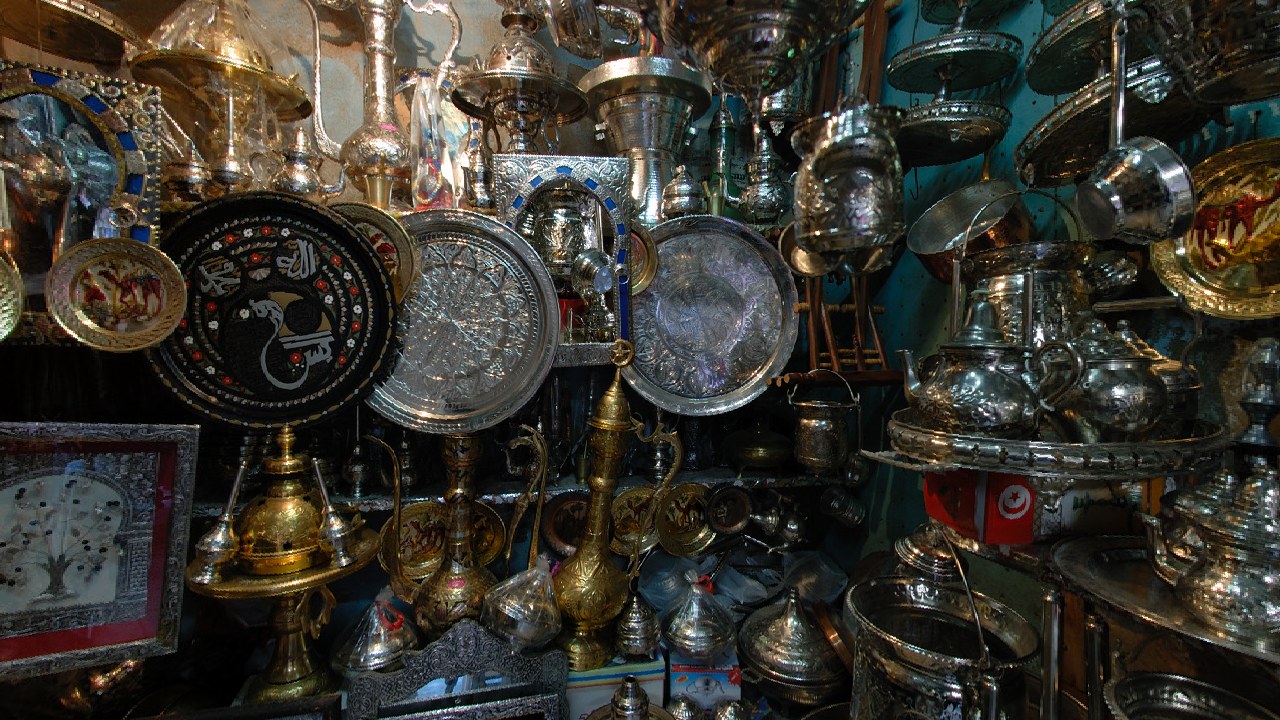
Souk en Nhas
The coppersmith produces a large range of red copper cooking utensils that were an obligatory part of a young bride's trousseau. Their shape, size and number were strictly defined.
Displaced for a time by stainless steel and other new materials, they are once again favoured by housewives for the beauty of their lines. Once cooking pots, they are increasingly appreciated for serving.
The cut copper sheet takes the desired shape through hammering, shaping, bending and planishing. All these operations require only a simple set of hammers as tools, but how much skill, the fruit of a long apprenticeship!
The finished pieces are covered with a thin layer of tin to protect them from the harmful effects of copper oxidation.
Tunis once had a guild specialising in tinning, the qzadria, which has died out. Today the coppersmith does the tinning himself. It was done once a year: as Ramadan or Eid el-Kebir approached, the souk came alive with baskets piled with utensils to be tinned. This was how both festivals were heralded in the Medina.
