Registered monuments
1. Sadiki College
Discoveries
2. Medersa el Bachia
Discoveries
3. Tunis City Hall
Discoveries
4. Municipal Theatre
Discoveries
5. Tourbet el Bey
Discoveries
6. Kasbah Mosque (Almohad Mosque)
Mosques and zawiyas
7. El Ksar Mosque
Mosques and zawiyas
8. Zitouna Mosque
Mosques and zawiyas
9. Hammouda Pacha Mosque
Mosques and zawiyas
10. Sahib el Tabaa Mosque
Mosques and zawiyas
11. Sidi Mehrez Mosque
Mosques and zawiyas
12. Youssef Dey Mosque
Mosques and zawiyas
13. Sidi Kacem Jellizi
Mosques and zawiyas
14. Zaouia Sidi Ali Chiha
Mosques and zawiyas
15. Zaouia Sidi Brahim Riahi
Mosques and zawiyas
16. Zaouia Sidi Mehrez
Mosques and zawiyas
17. Club Tahar Haddad
Palaces and houses
18. Dar Bach Hamba – Cultural Centre for the Mediterranean
Palaces and houses
19. Dar Ben Achour
Palaces and houses
20. Dar Ben Ammar
Palaces and houses
21. Dar Bouderbala – Galerie Médina
Palaces and houses
22. Dar el Haddad
Palaces and houses
23. Dar el Jaziri
Palaces and houses
24. Dar el Jeld – Gastronomy and Tradition
Palaces and houses
25. Dar el Médina
Palaces and houses
26. Dar Hammouda Pacha
Palaces and houses
27. Dar Hussein
Palaces and houses
28. Dar Lasram
Palaces and houses
29. Dar Othman
Palaces and houses
30. Dar Rachidia
Palaces and houses
31. Diwan Dar el Jeld
Palaces and houses
32. El Ali
Palaces and houses
33. Hotel Tunisia Palace
Palaces and houses
34. Calligrapher
Souks and crafts
35. Flag makers
Souks and crafts
36. El Makhzen
Souks and crafts
37. Blacksmith
Souks and crafts
38. The bransi at work
Souks and crafts
39. Diwan Bookshop
Souks and crafts
40. Carpenter
Souks and crafts
41. Souk Chaouachine
Souks and crafts
42. Souk el Attarine
Souks and crafts
43. Souk el Berka
Souks and crafts
44. Souk el Blaghgia
Souks and crafts
45. Souk el Blat
Souks and crafts
46. Souk el Fekka
Souks and crafts
47. Souk en Nhas
Souks and crafts
48. Souk et Trouk
Souks and crafts
Tunisia
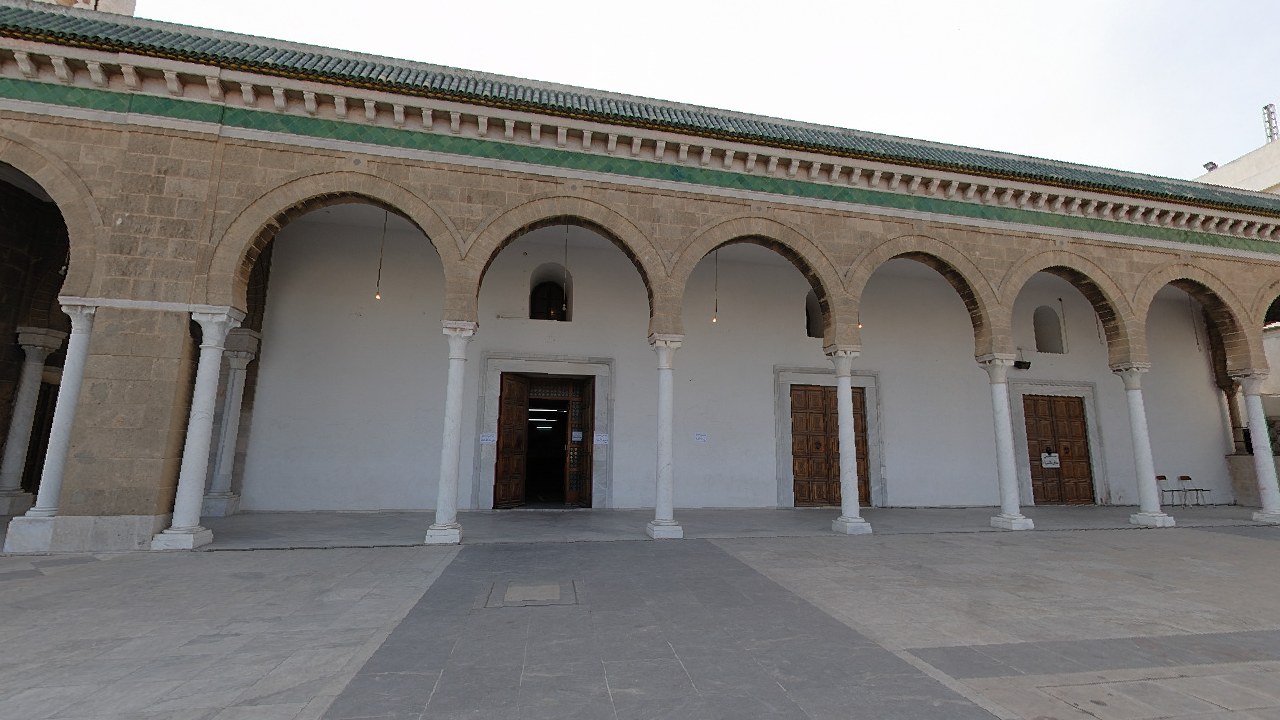
History: the minaret that served as a model After declaring his independence from the Almohads of Morocco, the first Hafsid ruler, Abu Zakariya, had a palace built, followed by this mosque. It was the sultan himself who, when the work was finished, made the first call to prayer on Friday 7 Ramadan…
360° virtual tour (4 scenes)
Location on the map
Kasbah Mosque (Almohad Mosque)
History: the minaret that served as a model
After declaring his independence from the Almohads of Morocco, the first Hafsid ruler, Abu Zakariya, had a palace built, followed by this mosque.
It was the sultan himself who, when the work was finished, made the first call to prayer on Friday 7 Ramadan 633 AH (July 1235). The mosque was originally reserved for the sultan and the court, but after the arrival of the Turks it was assigned to prayer according to the Hanafi rite of the new masters.
The monument's interest lies in the decoration of its minaret, the first of its kind, which has served as a model for all later minarets, including that of the Great Mosque built in the 19th century. It follows the arrangement of the Koutoubia in Marrakesh and the Giralda in Seville. On each side, polylobed arches rise from the bottom and continue, interlacing, to form a lozenge network of light stone on an ochre background. Next to the sovereign's name, the commemorative plaque records that of the master mason who supervised the work on this masterpiece, Ali Kacem el Arif.
A short story: the mast at the top of the minaret
At the top of the Kasbah mosque is a mast on which a white banner is raised at prayer times, giving the signal to all the mosques of the city, which in turn make the call at the same moment.
The privilege belongs to the Kasbah mosque for two reasons: first, the mosque's royal origin; second, its position at the highest point of the Medina, from which the banner can be seen from everywhere. A specialist appointed by decree used to ensure the accuracy of the time.
Today, given modern technical means, this signal could be dispensed with. Not at all! The white banner still flies five times a day at the top of the Kasbah minaret. What has changed is the spread of loudspeakers that broadcast the adhan (call) with an unpleasant screech. Where are the melodious voices of the muezzins, once chosen as much for their piety as for their voices?
Place de la Kasbah
