360° virtual tour (2 scenes)
Location on the map
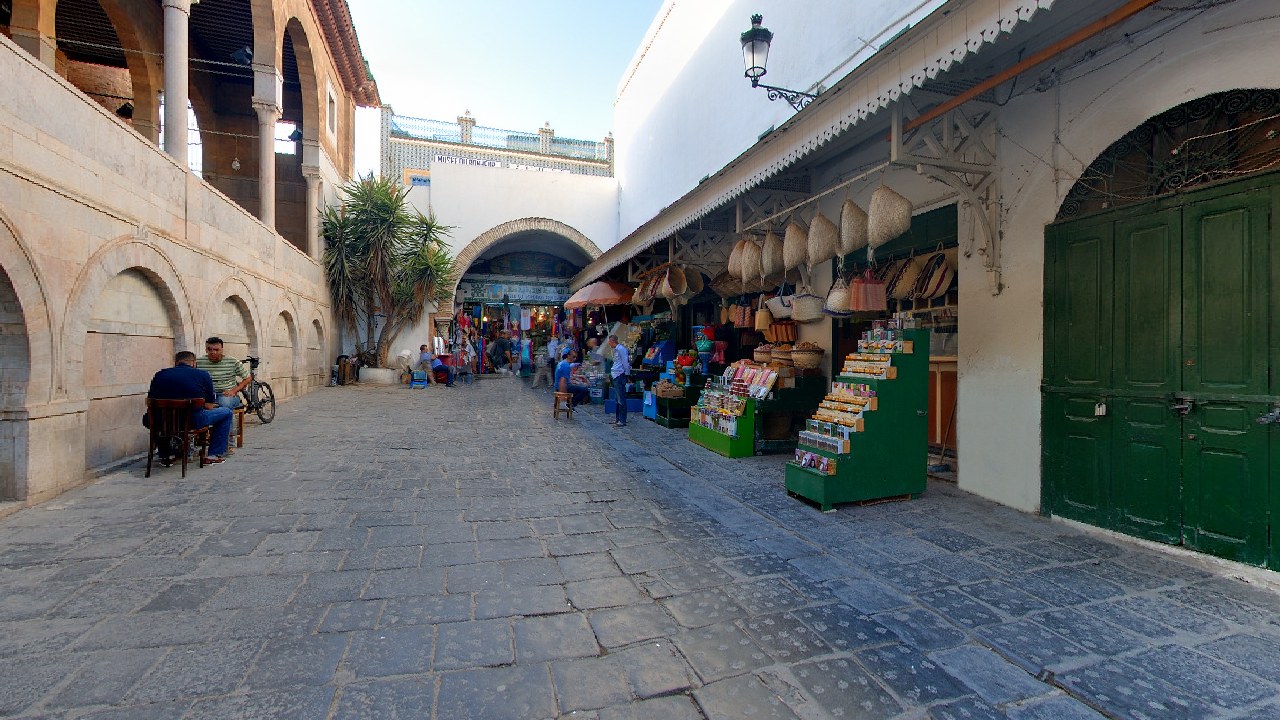
Souk el Fekka
Souk el Fekka lies at the foot of the Great Mosque, to the east. This is where people buy the ingredients for the pastries present at every celebration: births, circumcisions, weddings and Eid el-Seghir, which marks the end of Ramadan.
Almonds, walnuts, pistachios and raisins pile up in baskets, while the shelves are lined with bottles of almond or pistachio syrup, called rouzata from the Spanish orchata…
But what exactly is this mixture of nuts in their shells, sugared almonds and multicoloured sweets for?
A short story: a shower of nuts and sweets
Measles was feared as a serious, even dangerous illness, and its appearance was surrounded by "precautions". So that the rash "does not sink inwards", as people said, it had to be helped to come out.
The sick child was dressed in red and kept in a bed with red sheets and blankets, even the lamps being draped in crimson.
Another precaution was to give the child a mixture of nuts and sweets from Souk el Fekka. Relatives and visitors arrived laden with packets, which were placed on the child's bed until recovery. Was it to amuse the child, or to pass on the strength and vigour contained in the nuts? Once the child was well, the children of the family and the neighbours were invited and these precious treats were shared out among them.
They are also given to children at the karkouch, a celebration of a baby's first tooth. The invited children sit in a circle on a large rug with the baby in the middle. An adult pours the contents of a basket onto a mirror held above the baby's head. A shower of almonds, walnuts, sugared almonds and sweets falls onto the rug and the children scramble to pick them up; the quickest gets the biggest share!
