Registered monuments
1. Sadiki College
Discoveries
2. Medersa el Bachia
Discoveries
3. Tunis City Hall
Discoveries
4. Municipal Theatre
Discoveries
5. Tourbet el Bey
Discoveries
6. Kasbah Mosque (Almohad Mosque)
Mosques and zawiyas
7. El Ksar Mosque
Mosques and zawiyas
8. Zitouna Mosque
Mosques and zawiyas
9. Hammouda Pacha Mosque
Mosques and zawiyas
10. Sahib el Tabaa Mosque
Mosques and zawiyas
11. Sidi Mehrez Mosque
Mosques and zawiyas
12. Youssef Dey Mosque
Mosques and zawiyas
13. Sidi Kacem Jellizi
Mosques and zawiyas
14. Zaouia Sidi Ali Chiha
Mosques and zawiyas
15. Zaouia Sidi Brahim Riahi
Mosques and zawiyas
16. Zaouia Sidi Mehrez
Mosques and zawiyas
17. Club Tahar Haddad
Palaces and houses
18. Dar Bach Hamba – Cultural Centre for the Mediterranean
Palaces and houses
19. Dar Ben Achour
Palaces and houses
20. Dar Ben Ammar
Palaces and houses
21. Dar Bouderbala – Galerie Médina
Palaces and houses
22. Dar el Haddad
Palaces and houses
23. Dar el Jaziri
Palaces and houses
24. Dar el Jeld – Gastronomy and Tradition
Palaces and houses
25. Dar el Médina
Palaces and houses
26. Dar Hammouda Pacha
Palaces and houses
27. Dar Hussein
Palaces and houses
28. Dar Lasram
Palaces and houses
29. Dar Othman
Palaces and houses
30. Dar Rachidia
Palaces and houses
31. Diwan Dar el Jeld
Palaces and houses
32. El Ali
Palaces and houses
33. Hotel Tunisia Palace
Palaces and houses
34. Calligrapher
Souks and crafts
35. Flag makers
Souks and crafts
36. El Makhzen
Souks and crafts
37. Blacksmith
Souks and crafts
38. The bransi at work
Souks and crafts
39. Diwan Bookshop
Souks and crafts
40. Carpenter
Souks and crafts
41. Souk Chaouachine
Souks and crafts
42. Souk el Attarine
Souks and crafts
43. Souk el Berka
Souks and crafts
44. Souk el Blaghgia
Souks and crafts
45. Souk el Blat
Souks and crafts
46. Souk el Fekka
Souks and crafts
47. Souk en Nhas
Souks and crafts
48. Souk et Trouk
Souks and crafts
Tunisia
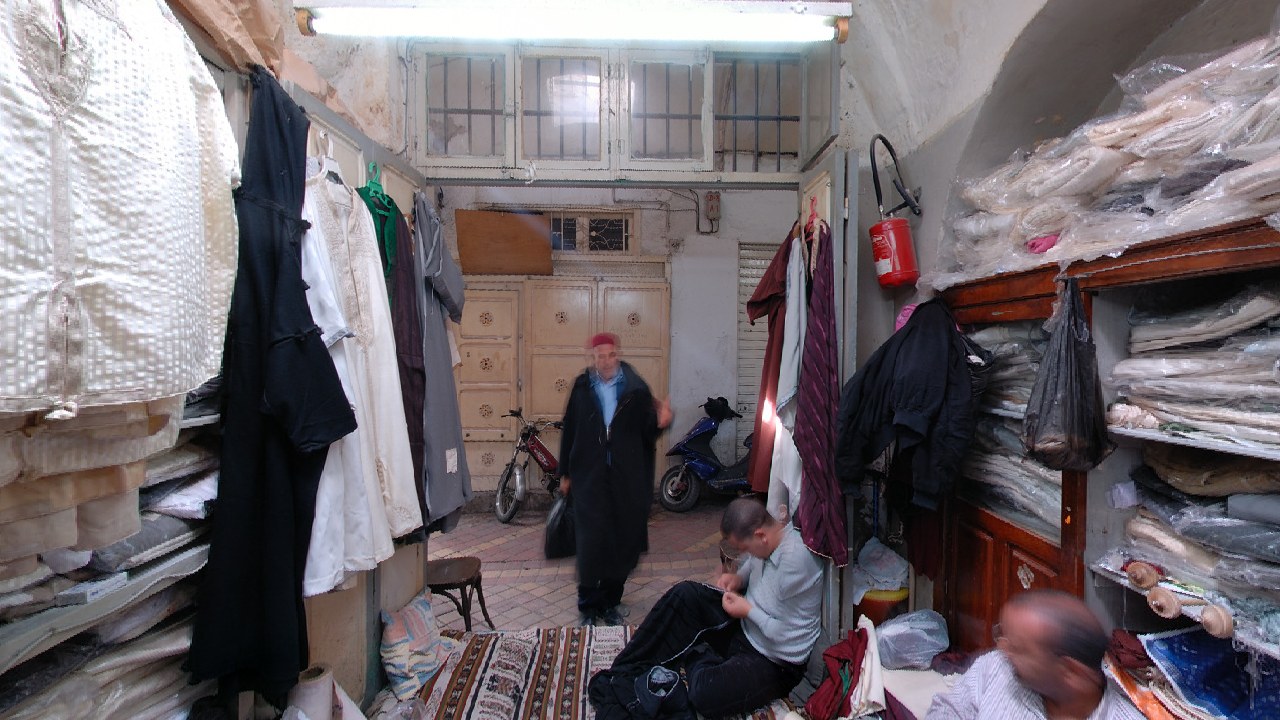
The bransi , tailor and embroiderer, with the same posture and gestures as his predecessors, continues to make men's traditional dress. Some call it ceremonial dress; in the past it was simply everyday wear. It consists of the jebba , loose and open at the front, worn over pleated trousers and…
360° virtual tour (1 scenes)
Location on the map
The bransi at work
The bransi, tailor and embroiderer, with the same posture and gestures as his predecessors, continues to make men's traditional dress. Some call it ceremonial dress; in the past it was simply everyday wear.
It consists of the jebba, loose and open at the front, worn over pleated trousers and layered waistcoats, one sleeveless, the fermla, the other long-sleeved, the menten. The outfit is completed by a burnous of fine jeridi wool (from the Jerid) or camel hair. All the pieces are embroidered and trimmed with silk thread.
The jebba is of white linen or raw silk known as stacruda; in winter it is of fine wool or striped wool and silk. The range of colours of the jebba seems to have been far richer than it is today, if we believe the description of Charles Lallemand (late 19th century): "The merchant dressed in a gandoura of rich, soft shades: yellow, apricot, red, turquoise, hazel, sea green, iron grey, salmon or pink…"
Souk ed Dziria
