360° virtual tour (5 scenes)
Location on the map
Sadiki College – The beginnings of modern education
The foundation was part of the reforms undertaken by Kheireddine, which touched on many areas, including education. The aim was to offer, alongside the traditional teaching given at the Great Mosque, a modern education introducing the sciences, foreign languages and new teaching methods.
Initially reserved for the elite of Tunis, it was given a boarding house and opened to the best pupils from the regions. This is how the young Habib Bourguiba, from Monastir, was admitted. Sadiki was the cradle of the Tunisian intelligentsia and the crucible in which the national movement against the French occupation was forged.
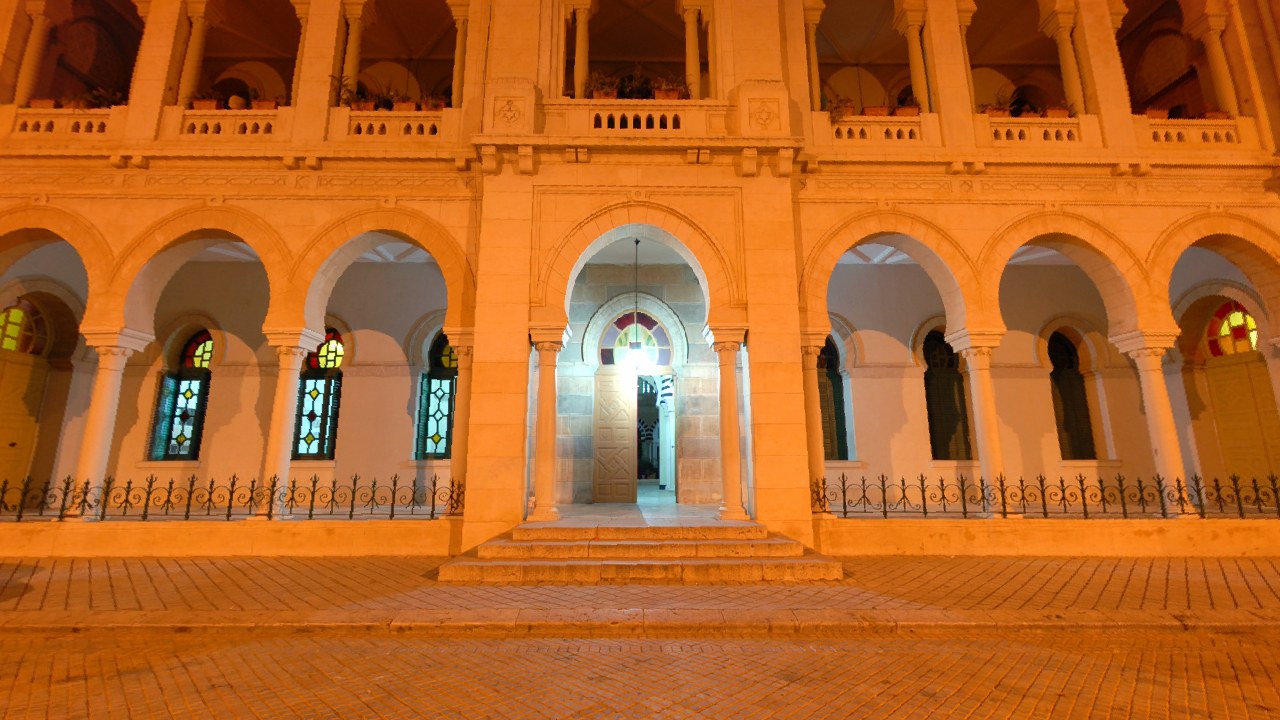
The building, the work of the architect Maillet, belongs to the Arabisance style.
An imposing façade presents a two-storey gallery, set back from the two side pavilions, crowned by an onion dome. In the background rises the silhouette of an Almohad-style minaret, for the architect included a masjed (oratory) in his programme, thus linking the building to the traditional medersa where this element is always present. The medersa also inspired the overall plan of the building, which arranges its classrooms around a vast central courtyard with porticoes on two levels.
Rue Sinan Pacha
