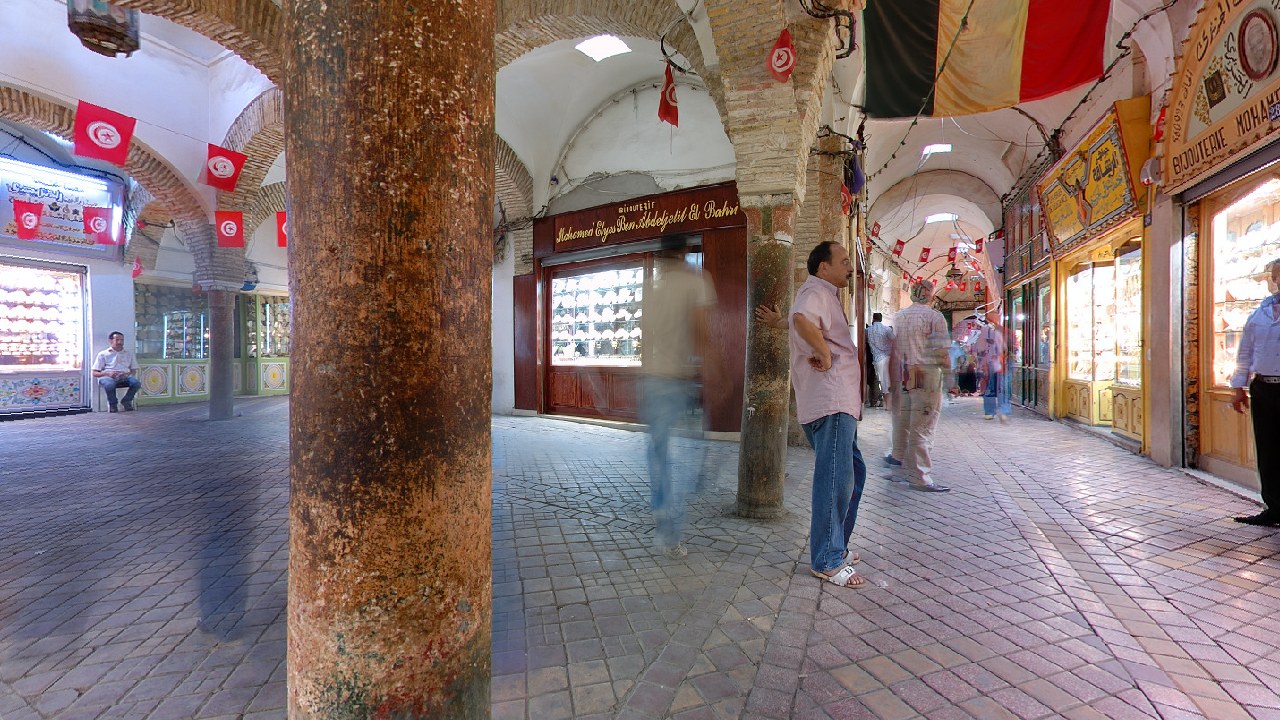
360° virtual tour (2 scenes)
Location on the map
Souk el Berka
History: the busiest souk in the Medina
This souk reflects Tunisian women's love of jewellery, and there is no shortage of occasions to receive it. Shortly before the wedding, the groom gives his fiancée a number of pieces whose value matches her social rank and beauty. The father must also give his daughter jewellery on the third day of her wedding. Not to mention births, circumcisions…
The shops also reflect the jewellers' wealth: richly carved and painted wooden shopfronts, display cases sparkling with a thousand lights…
The customers, mostly women, come in groups, for tradition has it that the bride's mother, mother-in-law, sisters and sisters-in-law… all take part in buying the bride's jewellery.
A short story: the auction
Souk el Berka is the only place where a jewellery auction is still held every morning except Friday and Sunday.
The amine, an expert and formerly head of the guild, receives in his office in the middle of the souks jewellery brought for sale by private individuals, mostly women. He examines the pieces, since only hallmarked gold is accepted, checks the seller's identity and distributes the lots among the dallal (a kind of auctioneer or town crier).
Each dallal has a glass-fronted box in which he places the jewellery he is to sell. He then goes round from one bidder to the next: a trader behind his counter, a private buyer on the lookout for an old piece…
Around one o'clock, when prices stop rising, the dallal returns to the amine's office, where the owner of the jewel is waiting. If the price suits, the sale is concluded and the dallal receives a percentage; if not, the jewel is withdrawn, perhaps to return another day when conditions are better.
