Kuwait
 Qatar
Qatar
 Saudi Arabia
 Palestine
Palestine
Palestine
 Oman
Oman
 Syria
Syria
 Tunisia
Palestine
Tunisia
Palestine
 United Arab Emirates
 Yemen
Yemen
 Libya
Saudi Arabia
Libya
Saudi Arabia
 Morocco
 Algeria
 Egypt
Egypt
 Iraq
Iraq
 Mauritania
Qatar
Oman
Oman
Oman
Mauritania
Qatar
Oman
Oman
Oman
 Jordan
Qatar
Iraq
Jordan
Qatar
Iraq
 Lebanon
Saudi Arabia
Saudi Arabia
Saudi Arabia
Lebanon
Saudi Arabia
Saudi Arabia
Saudi Arabia
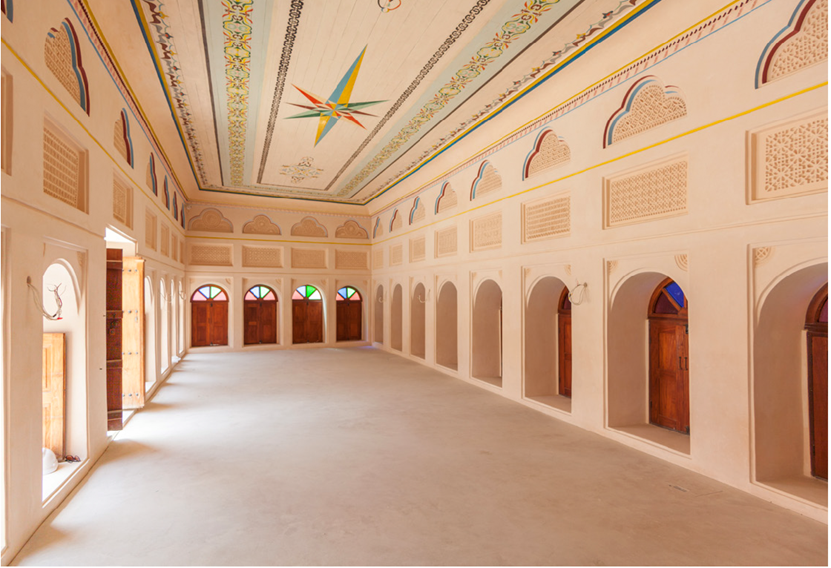
The Old Palace is considered one of the most famous heritage landmarks of Doha, and one of the most important archaeological buildings in the State of Qatar, which point to the old way of life in the country. It is an amazing heritage landmark that celebrates the history and heritage of Qatar while at the same time reflecting the country's rapid progress and development. The palace holds a unique historical importance for the State of Qatar, as it was built by Sheikh Abdullah bin Jassim bin Mohammed Al Thani, the ruler of Qatar at that time, in the early twentieth century, to serve as a headquarters for both residence and governance. The palace remained inhabited for more than 15 years, then it was completely abandoned after that.
The palace consists of several adjacent buildings. The general layout of the Old Palace shows a central area consisting of a group of its buildings in the form of an irregular rectangle, distributed as follows: the house of Sheikh Abdullah bin Jassim – the house of Sheikh Hamad bin Abdullah – the house of Sheikh Ali bin Abdullah – the middle inner majlis, consisting of two floors – the official majlis in the north-eastern corner – the small inner majlis – the northern gate – the eastern gate – the southern gate – the guard's house.
The Old Palace represents a model of the distinctive Qatari construction and architectural design, rich in decorative and architectural elements that reflect the characteristics of local Qatari architecture with all its architectural vocabulary (the method of construction, the pointed arches, the plaster ornaments, the merlons, the skylights (qamariyat), the ceilings).
The palace was restored and rehabilitated by order of the Father Emir Sheikh Khalifa in February 1972, to become a state museum. In 1975, after its rehabilitation, the palace was transformed into the headquarters of the former Qatar National Museum, and at that time it housed a collection of antiquities and exhibits celebrating Qatari heritage, culture, and environment. In 2013, the restoration and rehabilitation of the palace began for the second time, as it forms an important part and section within the design of the modern national museum. At present, the palace occupies a distinguished place in the heart of the new national museum, and is considered an amazing architectural icon that celebrates the past and embraces the future.