Kuwait
 Qatar
Qatar
 Saudi Arabia
 Palestine
Palestine
Palestine
 Oman
Oman
 Syria
Syria
 Tunisia
Palestine
Tunisia
Palestine
 United Arab Emirates
 Yemen
Yemen
 Libya
Saudi Arabia
Libya
Saudi Arabia
 Morocco
 Algeria
 Egypt
Egypt
 Iraq
Iraq
 Mauritania
Qatar
Oman
Oman
Oman
Mauritania
Qatar
Oman
Oman
Oman
 Jordan
Qatar
Iraq
Jordan
Qatar
Iraq
 Lebanon
Saudi Arabia
Saudi Arabia
Saudi Arabia
Lebanon
Saudi Arabia
Saudi Arabia
Saudi Arabia
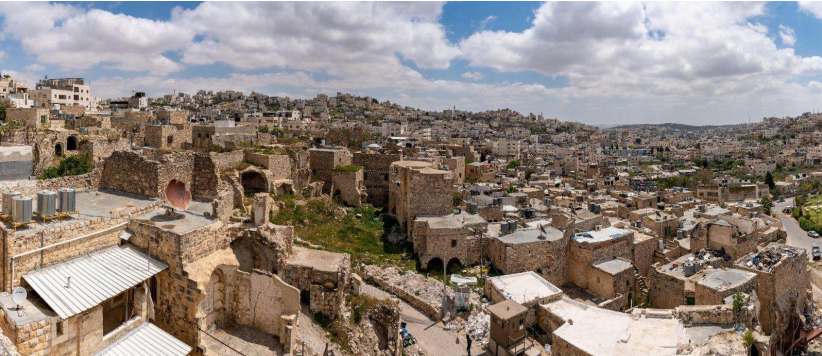
The Old Town of Hebron is located in the southern part of the West Bank, about 30 kilometers south of the city of Jerusalem, at an elevation ranging between 900 and 950 meters above sea level. It extends between two ranges of hills in the upper northern reach of the Hebron valley, with the Ibrahimi Mosque at its center. It was established in its present location during the early Islamic period, then the city came under Crusader control in the year 1099 CE until it was liberated by the commander Salah al-Din al-Ayyubi in the year 1187 CE. The Old Town flourished during the Mamluk period and became a distinguished cultural and religious center.
The buildings of the Old Town are a model of Islamic architecture, which is predominantly of the Mamluk and Ottoman character. Despite continuous construction and reconstruction operations, it has preserved its original style, features, and identity, in addition to the architectural, social, cultural, and economic values of its historic center. It is an ancient city sacred to the three heavenly religions, and it became the fourth holiest Islamic city after Mecca, Medina, and Jerusalem.
The Old Town of Hebron is distinguished by an organic, graduated urban layout that reflects the natural growth of the city over centuries, and is distinct from the traditional radial pattern of historic Islamic cities. The road network develops from narrow main streets emanating from the market gates into branching alleys that usually end in small squares or "courtyards" (ahwash), where the residential units are clustered.