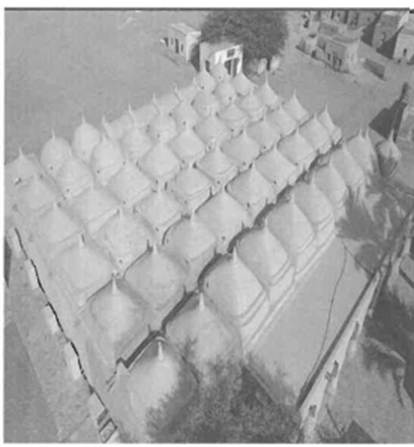
Kuwait
 Qatar
Qatar
 Saudi Arabia
 Palestine
Palestine
Palestine
 Oman
Oman
 Syria
Syria
 Tunisia
Palestine
Tunisia
Palestine
 United Arab Emirates
 Yemen
Yemen
 Libya
Saudi Arabia
Libya
Saudi Arabia
 Morocco
 Algeria
 Egypt
Egypt
 Iraq
Iraq
 Mauritania
Qatar
Oman
Oman
Oman
Mauritania
Qatar
Oman
Oman
Oman
 Jordan
Qatar
Iraq
Jordan
Qatar
Iraq
 Lebanon
Saudi Arabia
Saudi Arabia
Saudi Arabia
Lebanon
Saudi Arabia
Saudi Arabia
Saudi Arabia
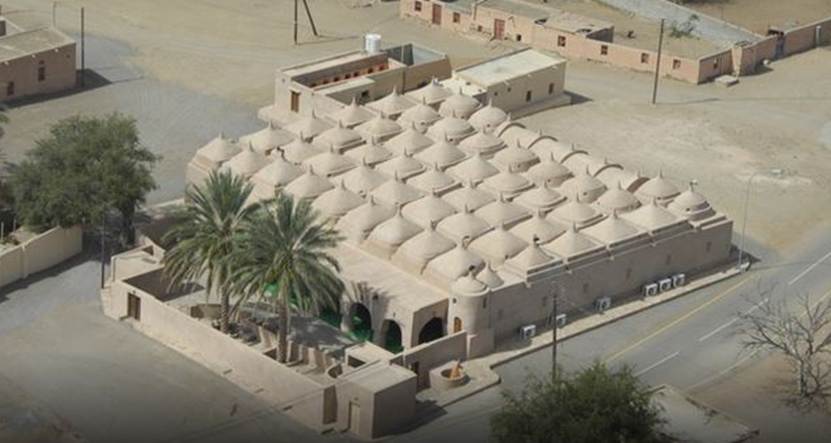
The Al Hammouda Mosque is one of the most famous ancient historical landmarks in the Wilayat of Ja'alan Bani Bu Ali, in the Sultanate of Oman. Its construction dates back more than 500 years, and it is distinguished by its many domes of exquisite Islamic architectural design, and it still preserves its ancient geometric form. This mosque is distinguished by its many domes; the number of domes crowning the mosque is 52 domes, embodying the Islamic art of architecture of the Omani people since antiquity and the unique engineering of the ancestors, which led them to call it the Mosque of Domes for its uniqueness in the abundance of domes compared to the old mosques of the Sultanate.
The mosque is located in the Al-Zahir area near the old Friday market, which to this day witnesses active commercial movement for various displays, daily necessities, and craft, traditional, and folk industries. It draws its commercial activity and its displays from the ancient historical eras with which the wilayat is rich. The area bordering the mosque from all directions is distinguished by ancient archaeological buildings that tell of the nobility and authenticity of the glorious past, with their beautiful and unique design and strategic location.
The Mosque of Domes consists of 24 columns, five arcades, and two service rooms. It has three entrances, and inside it there is an old falaj used for ablution. The mosque accommodates more than 700 worshippers, and all five prayers as well as the Friday prayer are performed in it, and it is considered a center for knowledge and the study and memorization of the Holy Quran.
The Mosque of Domes received the attention of the government; it was restored twice, the first was in the year 1992 CE, and the second in the year 2010 CE, during which the basic structure of the mosque was maintained, and it remained preserved in its general and basic form.
Many visitors and tourists from inside and outside the Sultanate have flocked to the Al Hammouda Mosque; as it is considered an Islamic and tourist destination and a religious landmark rich in ancient Omani touches and engineering works.