Kuwait
 Qatar
Qatar
 Saudi Arabia
 Palestine
Palestine
Palestine
 Oman
Oman
 Syria
Syria
 Tunisia
Palestine
Tunisia
Palestine
 United Arab Emirates
 Yemen
Yemen
 Libya
Saudi Arabia
Libya
Saudi Arabia
 Morocco
 Algeria
 Egypt
Egypt
 Iraq
Iraq
 Mauritania
Qatar
Oman
Oman
Oman
Mauritania
Qatar
Oman
Oman
Oman
 Jordan
Qatar
Iraq
Jordan
Qatar
Iraq
 Lebanon
Saudi Arabia
Saudi Arabia
Saudi Arabia
Lebanon
Saudi Arabia
Saudi Arabia
Saudi Arabia
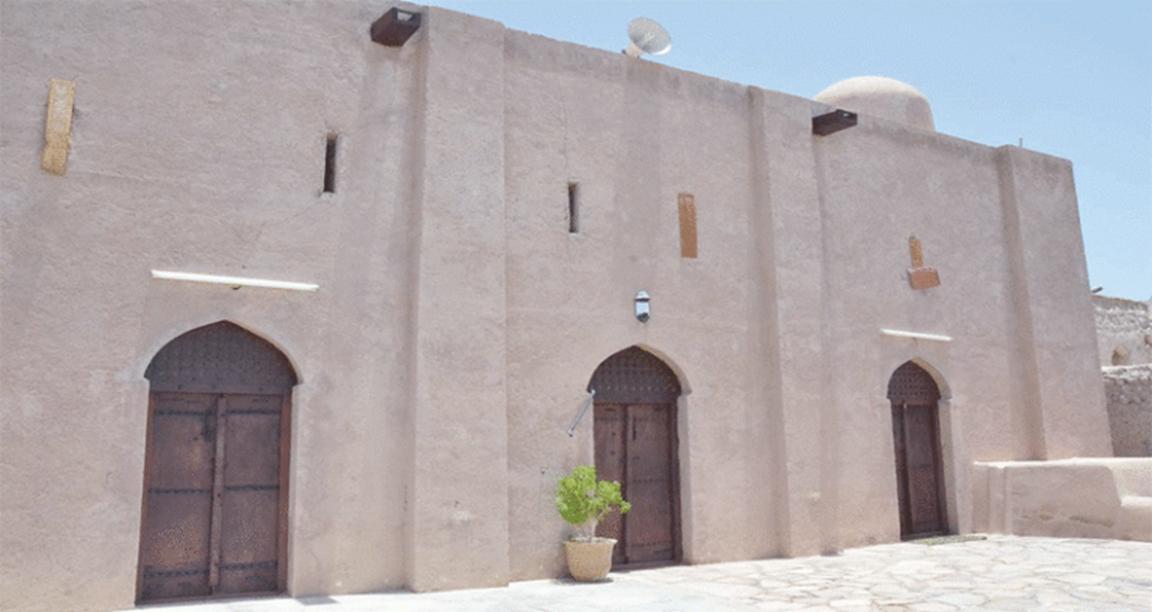
The mosque is located in the village of Al-Aqr in the historic wilayat of Nizwa. It is a historical landmark built on a rocky base, surrounded by narrow and winding roads and alleys. The landmark rises about 3 to 5 m above the floor of the surrounding road, depending on the slope of the road.
Al-Shawadhna Mosque is considered one of the most famous historical mosques of Oman. Some attribute the naming of the mosque to “the Shawadhna tribe” that first built it in the seventh year of the first century AH. It was renovated several times, the last of which was in the year 936 AH / 1529 AD. The mosque became known as the Mosque of the Two Qiblas, and it is considered a model of the traditional Ibadi city mosques, and one of the most beautiful buildings that have been preserved in Nizwa.
The mosque consists of three main units: a single prayer hall, a courtyard (sahn), and an ablution hall. The mosque can be reached through a staircase on the eastern side.
The courtyard (sahn): It is an open, rectangular space, with dimensions of 12.5 m x 8.75 m. Its north-eastern end is occupied by a small building containing a well and ablution facilities.
The prayer hall: It can be entered through three rectangular doors, each reaching a height of 2.10 m and a width of 1.07 m. They are wooden doors, each consisting of two leaves made of thick wooden planks. The “nose” of the door is decorated with engravings and ornaments that took the traditional shapes of flowers and climbing branches. The mihrab: In the middle of the qibla wall is a plaster mihrab whose construction dates back to the year 936 AH, corresponding to 1529 AD, as confirmed by the dated inscription on the mihrab panel itself. The mihrab's decoration follows the classical style of Ibadi mosques – which includes mihrabs bearing arches, flanked by columns on both sides and surrounded by panels engraved or skillfully cast from plaster.