Kuwait
 Qatar
Qatar
 Saudi Arabia
 Palestine
Palestine
Palestine
 Oman
Oman
 Syria
Syria
 Tunisia
Palestine
Tunisia
Palestine
 United Arab Emirates
 Yemen
Yemen
 Libya
Saudi Arabia
Libya
Saudi Arabia
 Morocco
 Algeria
 Egypt
Egypt
 Iraq
Iraq
 Mauritania
Qatar
Oman
Oman
Oman
Mauritania
Qatar
Oman
Oman
Oman
 Jordan
Qatar
Iraq
Jordan
Qatar
Iraq
 Lebanon
Saudi Arabia
Saudi Arabia
Saudi Arabia
Lebanon
Saudi Arabia
Saudi Arabia
Saudi Arabia
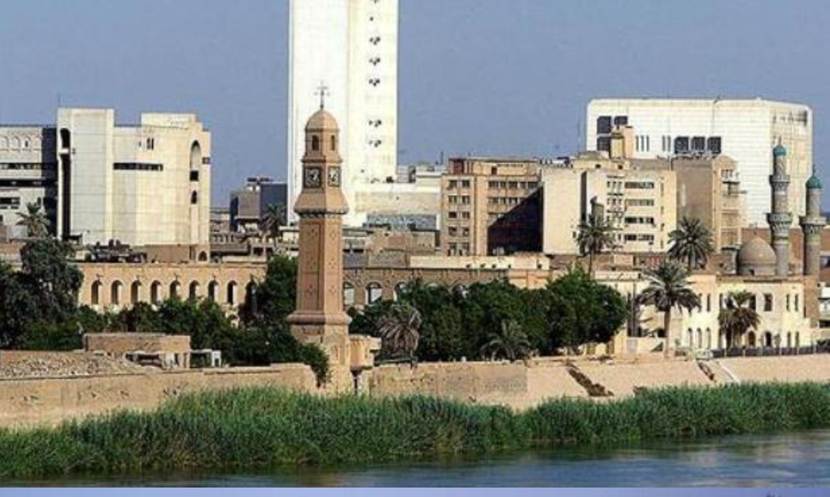
Baghdad enjoys the distinction of the Tigris River cutting through its geographical area, and its impact on the natural, urban and social environment since its founding in the second century AH / eighth century AD by its founder, the Abbasid Caliph Abu Ja'far al-Mansur (136-158), until now. The banks of the river are considered a suitable place for the growth of urban communities (as attraction points for many activities); their image has differed and changed according to the requirements and circumstances of each era.
The urban heritage site (Historical Landmarks on the Tigris River) is located on the Rusafa side of the capital, Baghdad, occupying an important and vital position on the eastern side of the Tigris River and extending over an area of 7.57 hectares. It contains ancient buildings that played an important and prominent role in the ancient political and religious history of Iraq, especially in the Abbasid era during the sixteenth and seventeenth centuries AH / the twelfth and thirteenth centuries AD, and the period of the Ottoman occupation, which extended for three centuries from the eleventh to the thirteenth century AH / the seventeenth and eighteenth centuries AD. Some of them still perform their function, such as the mosques, while others have now been transformed into important cultural and tourist attractions on the banks of the river.
Includes the heritage site urban, buildings classified as national heritage and antiquities that must be protected and preserved, and below there will be mentioned the buildings belonging to the property according to the sequence of their geographical location with the periods historical of their construction:
1- The School Al-Mustansiriya / architecture of the era Abbasid, in the seventh century AH.
2- Mosque Al-Asifiyah / architecture of the period of the occupation Ottoman, in the first century.
3- Mosque Al-Wazir / period of architecture from the occupation Ottoman, in the second century
4- Al-Rushdiya military / The School military secondary school / the architecture from the period of the occupation Ottoman in the century third .
5- The building old, of the complex Al-Saray / the architecture from the period of the occupation Ottoman, in the second century AH, and it comprises:
1-5· the building of the government old ((the Qishla) and the tower of the Clock.
2-5· The building old, of the Council of Ministers.
3-5· a gate Al-Saray and the buildings attached to it.
4-5· House of the Governor Ottoman (Dar of the Governor.)
6- House al-Hikma (the School of Crafts ) / the architecture period from the occupation Ottoman, in the second century AH .
7- The Palace Abbasid (The School Al-Sharabiya) the architecture from the Abbasid era in the century sixth and seventh AH