Kuwait
 Qatar
Qatar
 Saudi Arabia
 Palestine
Palestine
Palestine
 Oman
Oman
 Syria
Syria
 Tunisia
Palestine
Tunisia
Palestine
 United Arab Emirates
 Yemen
Yemen
 Libya
Saudi Arabia
Libya
Saudi Arabia
 Morocco
 Algeria
 Egypt
Egypt
 Iraq
Iraq
 Mauritania
Qatar
Oman
Oman
Oman
Mauritania
Qatar
Oman
Oman
Oman
 Jordan
Qatar
Iraq
Jordan
Qatar
Iraq
 Lebanon
Saudi Arabia
Saudi Arabia
Saudi Arabia
Lebanon
Saudi Arabia
Saudi Arabia
Saudi Arabia
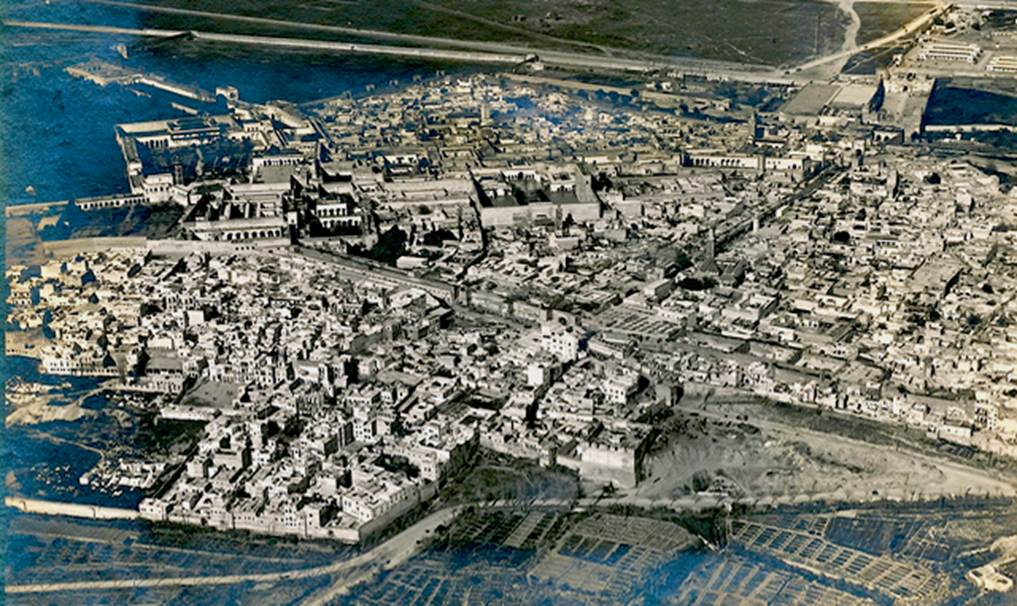
The old city of Fez is located in the far north-east of Morocco, and its area is estimated at 280 hectares. The city is divided into three sections, namely: Fez el-Bali , Fez el-Jadid, and el-Blida. It occupies an area in the form of a fertile valley surrounded by hills that include a large number of cedar and oak trees from various directions, in addition to vast expanses of farmland, and the plain of Saïss, which includes numerous water springs.
The city of Fez is one of the earliest Islamic urban centres to be built in North Africa. It was founded at the end of the eighth century AD by Idris the First bin Abdullah on the right bank of the river, known as the "Andalusians' Quarter", and it was expanded by Idris the Second in the year 809 AD by founding the "Kairouanis' Quarter" on the left bank, and important additions were made to it by the successive sultans of Morocco who ruled it. Since its founding, the city of Fez has preserved its urban fabric, which is formed of two large fortified urban units (the Andalusian bank and the bank of the Kairouanis) separated by the Fez river.
The city was distinguished by unique architectural and artistic characteristics that gave it a lofty status as the largest historical cities and the best preserved in the Arab-Islamic world. Throughout its ancient civilisational history, the city of Fez developed its entity to become one of the great Islamic capitals rich in its diverse civilisational heritage, which holds a wide range of architectural forms and urban landscapes. It includes a large number of archaeological landmarks of a religious, civil and military nature that embody a culture with multiple influences.
Despite the various influences that have affected the urban environment and the modern way of life, the old city of Fez still retains the majority of its functions and its inherited and authentic characteristics, and preserves the way of life, knowledge and accumulated tangible and intangible expertise, thanks to which it deserved to be classified within the World Heritage List of UNESCO since 1981 AD.