The content is automatically translated - it may contain errors. It will be reviewed soon.
The Arabization Coordination Office opens its cultural salon by discussing the impact of electronic dictionaries on translation into and from the Arabic language
May, 06 2025
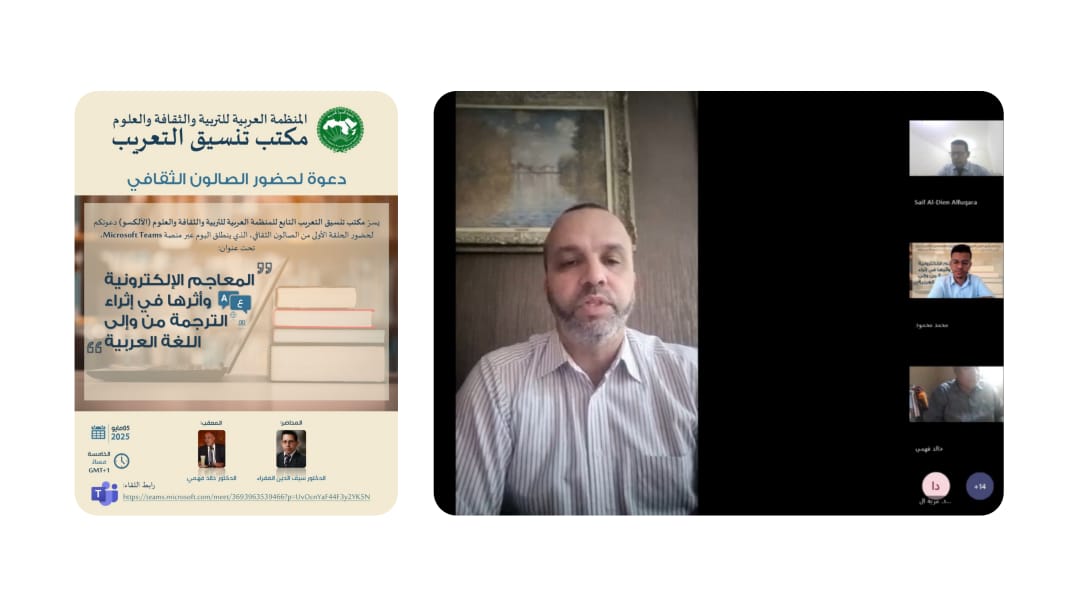
 Event venue : United Arab Emirates
 Execution :
ACB
Execution :
ACB [Auto-translated content]
Within the framework of its scientific activities aimed at supporting lexical and linguistic projects and enhancing the environment of dialogue and exchange of experiences, the Arabization Coordination Office in Rabat organized, on Monday, May 5, 2025, the first episode of its Cultural Salon, in the presence and participation of a group of Arab doctors and researchers, which was devoted to the topic: “Electronic dictionaries and their impact on enriching translation to and from the Arabic language.” The meeting began with a welcome speech delivered by Professor Dr. Murad Al-Rifi, Director of the Office, in which he stressed that the Cultural Salon comes within the Office’s vision aimed at establishing solid scientific traditions and keeping pace with developments in the field of the Arabic language and its lexical industry, pointing to the importance of unifying efforts and benefiting from Arab experiences in supporting joint terminological work. The main lecture at this meeting was presented by Professor Dr. Saif Al-Din Taha Al-Faqara from the University of Sharjah in the United Arab Emirates, where he reviewed the reality of Arabic electronic dictionaries through a critical and cognitive analysis, and stopped at the most prominent experiences in this field, asking about the desired model for the Arabic electronic dictionary. He explained that there are two trends in the electronic lexical industry: the first is the digitization of traditional lexical repertoires, and the second combines the old and the new while allowing digital interaction, calling for developing these initiatives collectively that befits the level of the current technical challenges. In his comment on the lecture, Professor Dr. Khaled Fahmy from Menoufia University in Egypt discussed translators’ motivations for resorting to bilingual electronic dictionaries, most notably ease of use, availability of content, and low costs. However, on the other hand, he pointed out some shortcomings, such as the obsolescence of some dictionaries, the absence of geographical representation of concepts, and the weak ideological presence in the construction of terminology, which may lead to semantic confusion in understanding and translation. The session was attended by more than forty scientific and academic figures from several Arab countries, in addition to two interventions by Professor Dr. Omar Mahdioui from Moulay Ismail University in Meknes, and Dr. Fatima Al-Husseini, Vice President of the National Coalition for the Arabic Language in the Kingdom of Morocco. At the conclusion of the meeting, Dr. Murad Al-Rifi expressed his thanks to the lecturers and attendees, announcing that the topic of the next episode of the salon will be about “lexical studies and their impact on mastering the Arabic language and teaching it.” This episode was organized via the visual analogue software Microsoft Teams, and its material will be published later through the office’s media outlets. #Arabization_coordination_office #ALECSO #Arabic_language #Cultural_Salon #Translation #Arabization #Electronic_dictionaries #Dictionaries #Term
Related articles
Jul, 27 2026
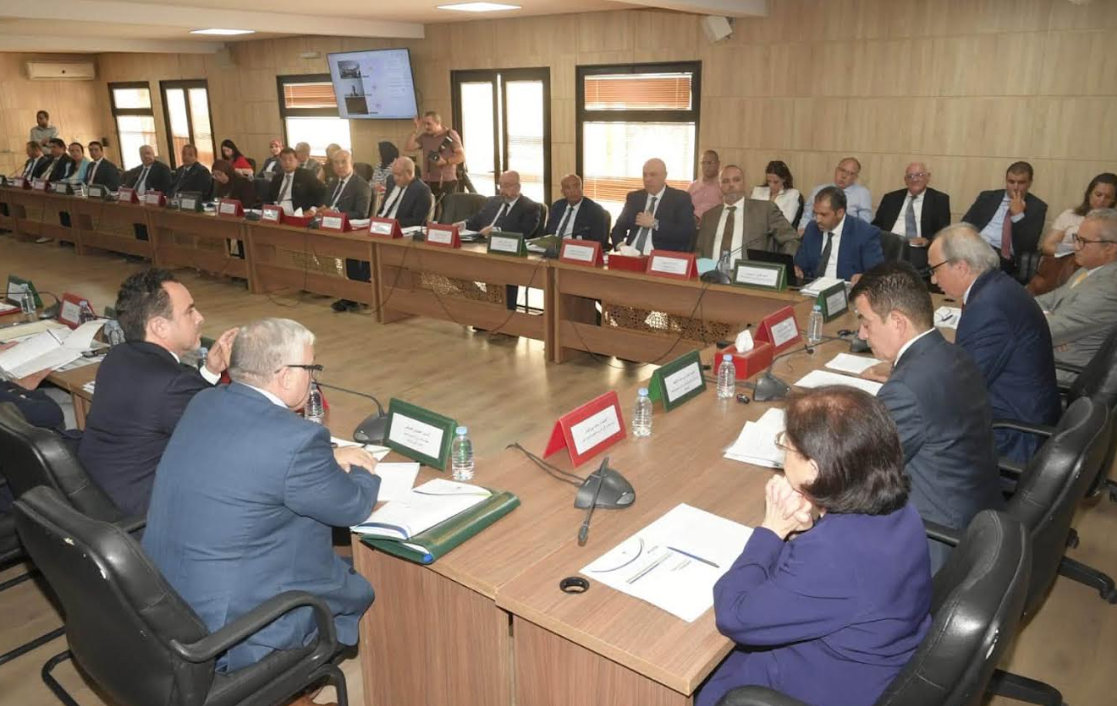
ALECSO Participates in the Opening Session of the General Assembly of the Moroccan National Commission for Education, Science and Culture
Read more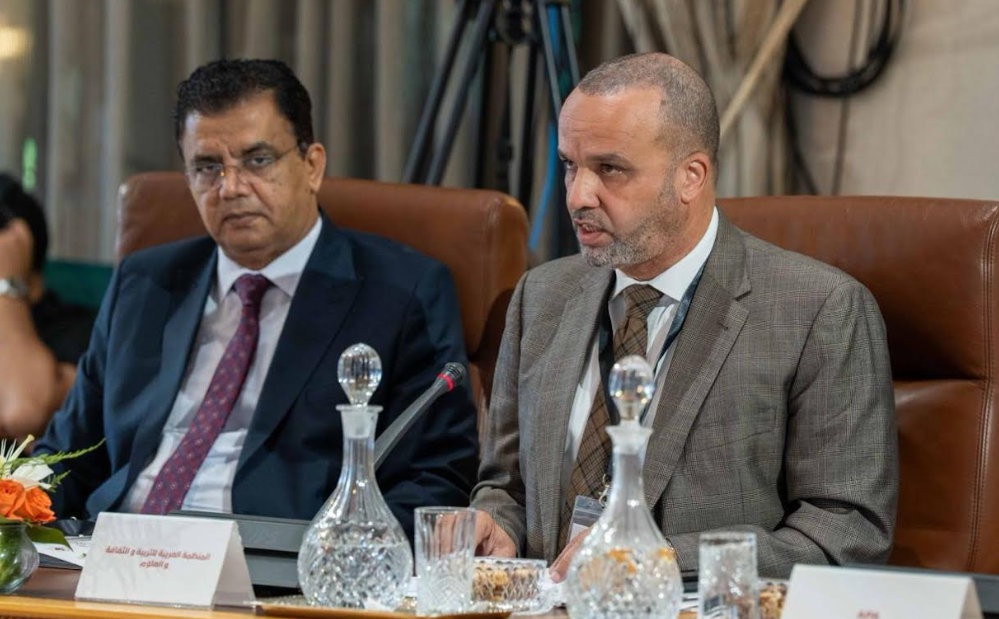
Jun, 26 2026
The Bureau for the Coordination of Arabization represents ALECSO in a high-level discussion session on Jerusalem as the title of a global narrative for peace
Read more
Latest News
Sep, 23 2026
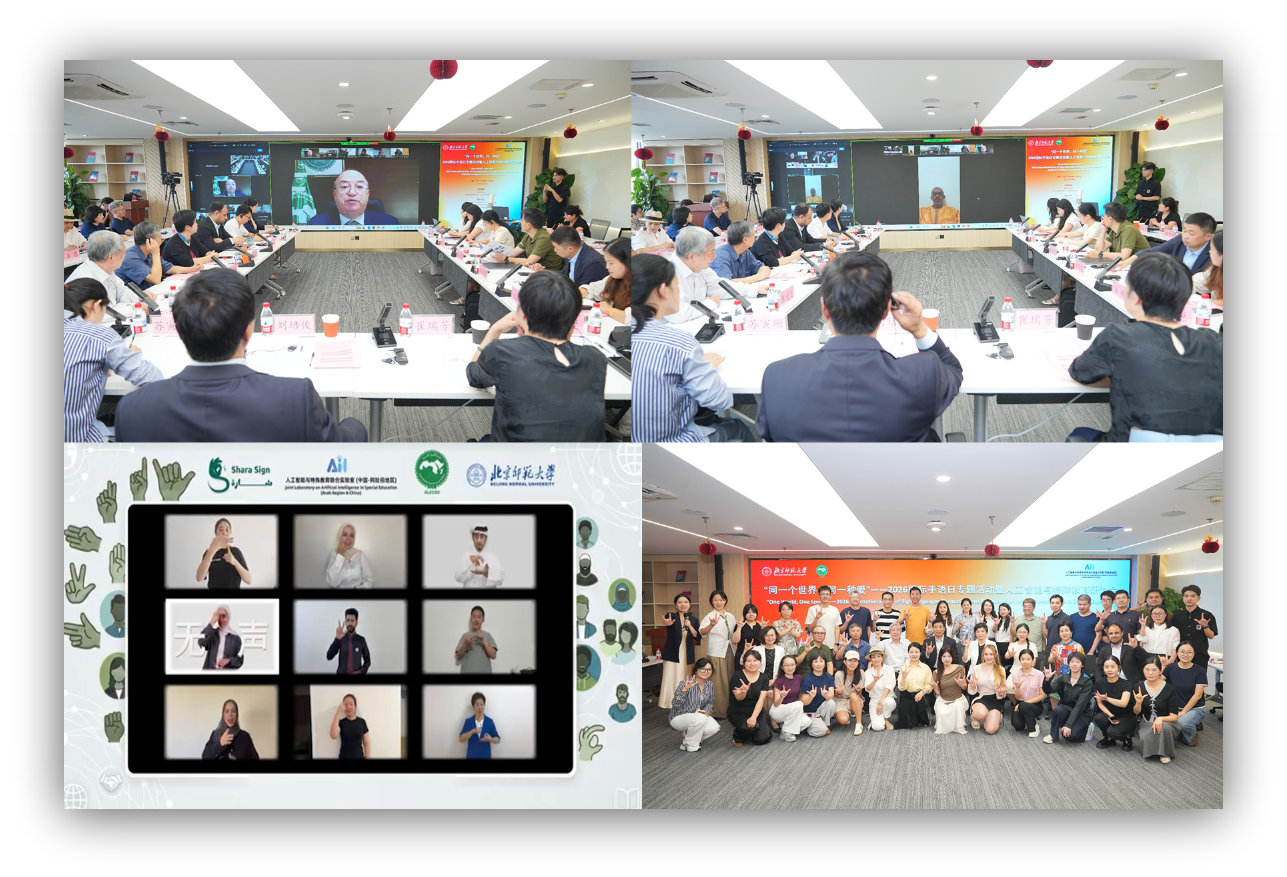
ALECSO participates in the opening of the International Day of Sign Languages demonstration and launches the global video - One World, One Love
On September 23, 2026, the Arab Educational, Cultural and Scientific Organization (ALECSO) participated in organizing the international event “One World, One Love,” which was held on the occasion of…
Read more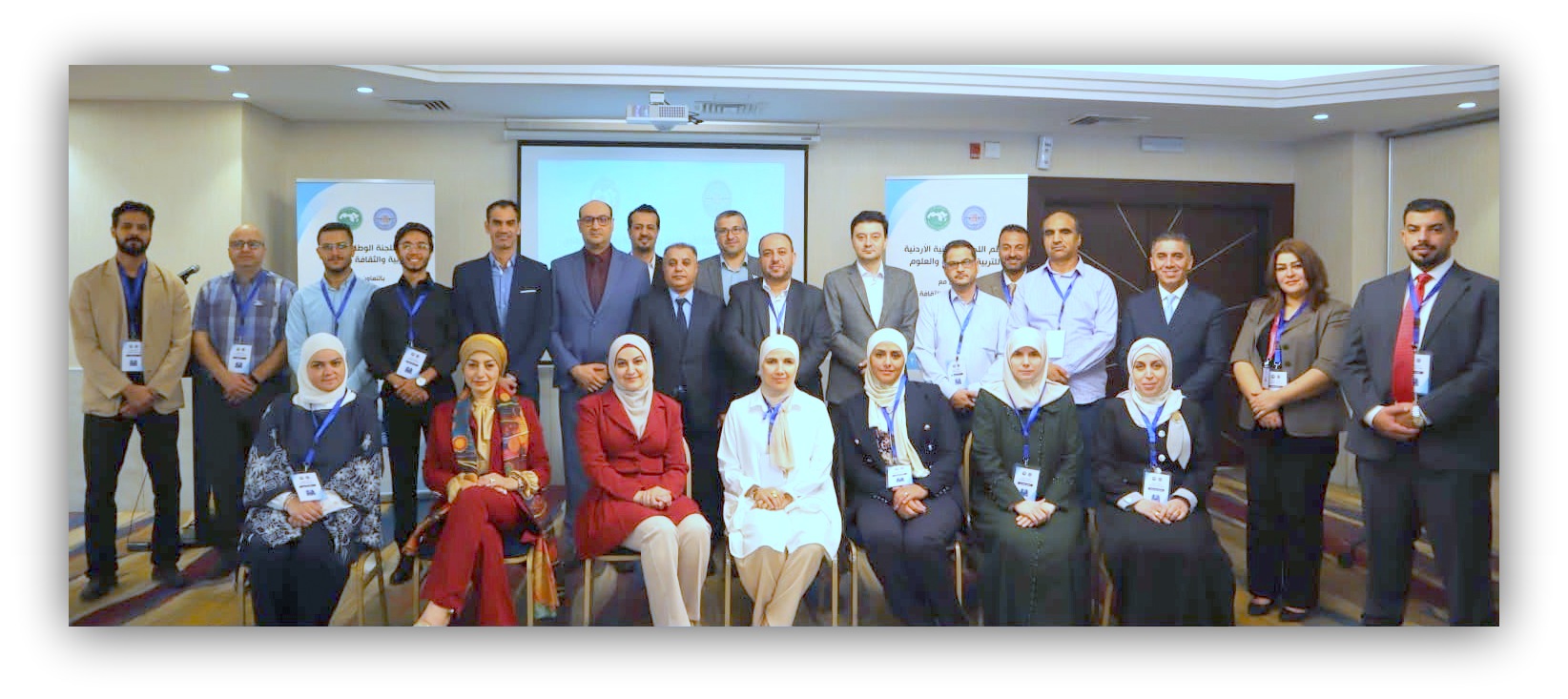
Sep, 23 2026
ALECSO organizes a training course in Amman on advanced employment of artificial intelligence
The Arab Educational, Cultural and Scientific Organization (ALECSO) Department of Education, in cooperation with the Jordanian National Commission for Education, Culture and Science, is organizing,…
Read more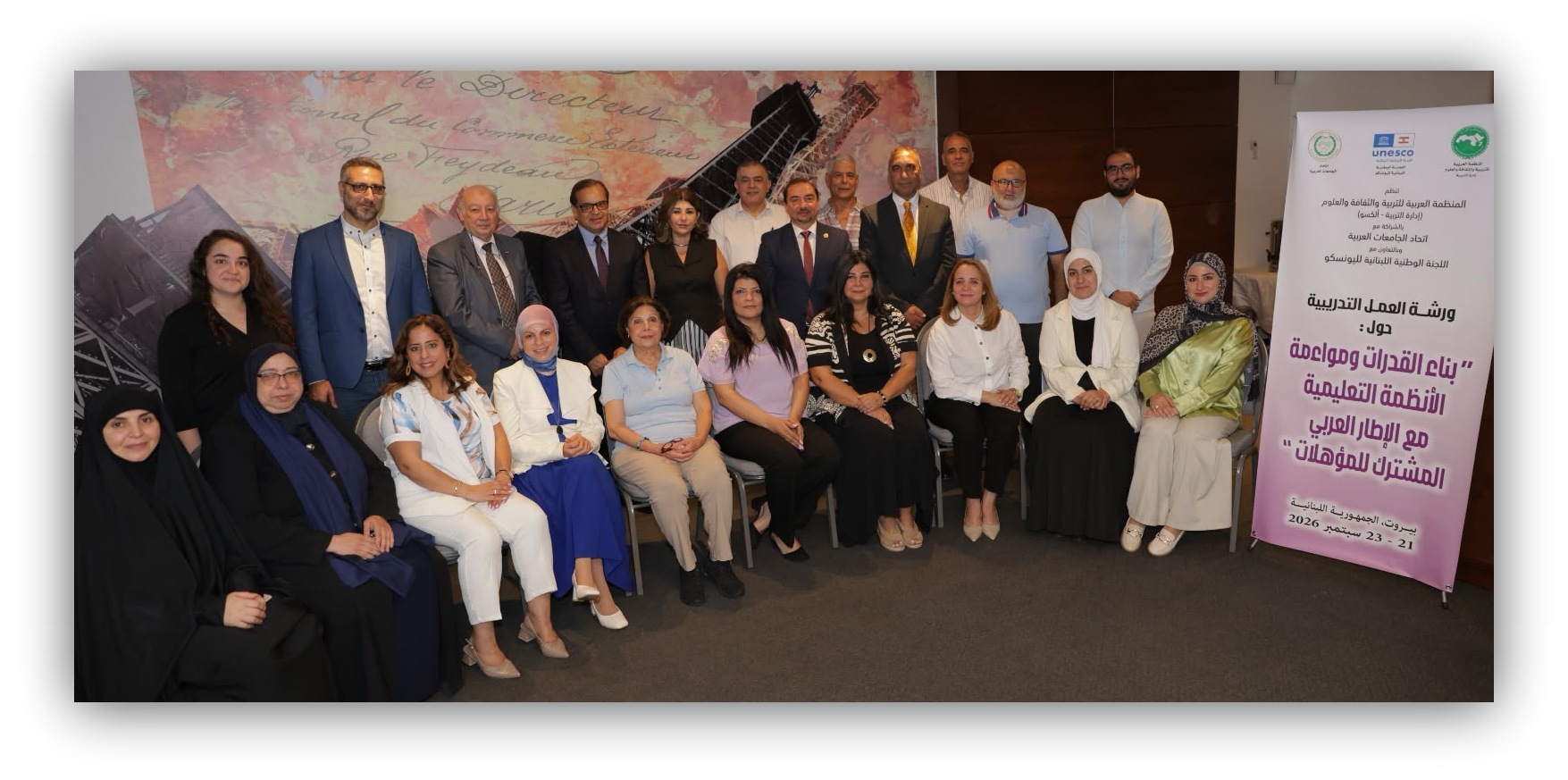
Sep, 23 2026
الألكسو تطلق في بيروت ورشة إقليمية لتعزيز جودة المؤهلات التعليمية وبناء الثقة في مخرجات التعلم
انطلقت في العاصمة اللبنانية بيروت أعمال الورشة التدريبية الإقليمية" تعزيز جودة المؤهلات التعليمية في ضوء الإطار العربي المشترك"، التي تنظمها المنظمة العربية للتربية والثقافة والعلوم (الألكسو) ممثلة…
Read more