The content is automatically translated - it may contain errors. It will be reviewed soon.
ALECSO participates in the opening of the International Day of Sign Languages demonstration and launches the global video - One World, One Love
Sep, 23 2026
 Execution :
Director General
Execution :
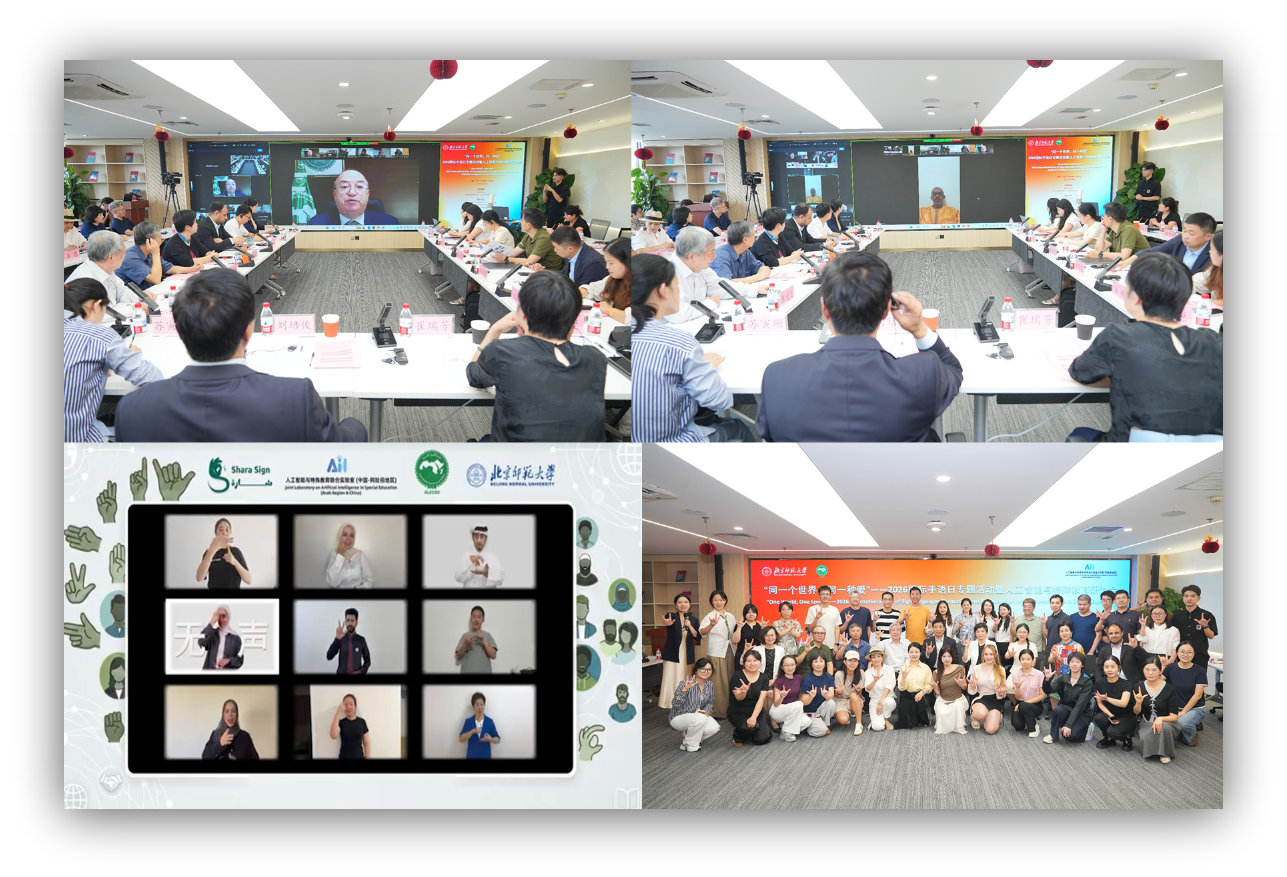
Director General On September 23, 2026, the Arab Educational, Cultural and Scientific Organization (ALECSO) participated in organizing the international event “One World, One Love,” which was held on the occasion of the International Day of Sign Languages, in addition to a scientific symposium on artificial intelligence in the service of special education, in partnership with Beijing Normal University, the UNESCO Chair for Artificial Intelligence in Education, and the Joint Laboratory for Artificial Intelligence in Special Education between the Arab region and China, and with the participation of a number of institutions, experts, researchers, and community representatives. Deaf people from China, the Arab region and Southeast Asia. His Excellency Professor Dr. Mohamed Ould Omar, Director General of ALECSO, opened the demonstration with a speech he delivered remotely, in which he stressed that sign languages are not just tools for communication, but rather are living languages that carry identity, culture and knowledge, and represent an integral part of the linguistic and cultural diversity of humanity. His Excellency also stressed that empowering people with disabilities and ensuring their right to education and equal participation constitute an essential part of ALECSO’s mission and commitments in the Arab region. He highlighted the importance of employing technology and artificial intelligence to remove barriers and expand access to knowledge, provided that these technologies are comprehensive, fair, ethical, and available to all, stressing that “technology is not the goal; Man is the target. His Excellency the Director General renewed ALECSO’s commitment to continuing cooperation with Arab countries and international partners in order to build more inclusive societies, more equitable education, and more humane technology, calling for sign languages to be bridges between peoples, and artificial intelligence to be a tool for promoting dignity and equal opportunities. Following this, Mr. LIU Peijun, Director-General of the Language Information Department of the Chinese Ministry of Education, delivered an opening speech in which he highlighted the importance of the occasion and international cooperation in supporting sign languages and promoting the use of technology in the service of inclusive education and persons with disabilities. The program also included the presentation of the joint laboratory for artificial intelligence in special education between the Arab region and China, by Professor Dr. Ahmed Al-Talili, associate professor at Beijing Normal University, and Dr. Chen Ying, a post-doctoral researcher at the university, where the objectives of the laboratory, its areas of work, and its contribution to developing innovative solutions in the field of special education were introduced. Look out And diverse. Scientific symposium on artificial intelligence and special education. The scientific part of the demonstration was devoted to examining the potential of artificial intelligence and digital technologies in supporting special education and inclusive education. The program included a group of scientific lectures that addressed the relationship between artificial intelligence, special education, and inclusive education, and the future of sign language technologies in light of the transition from recognizing signs to understanding meaning and executing actions, all the way to artificial agent intelligence. The DeafSafe project was also presented, which uses virtual characters and gamification methods to enhance safety for deaf people, in addition to displaying innovative technological models and solutions in the fields of digital accessibility, communication and education. The event concluded with a roundtable on the opportunities and challenges of artificial intelligence in educating deaf people, which discussed the transformations brought about by artificial intelligence in education, entrepreneurship among deaf people, the development of accessibility products from the perspective of users, the rights of people with disabilities, and the ethical dimensions of the use of artificial intelligence. ALECSO's participation in this event comes within the framework of its continuing efforts to support inclusive education, promote linguistic and cultural diversity, and develop Arab and international cooperation in the field of employing artificial intelligence and modern technologies to serve people with disabilities, ensuring their full and effective participation in building the future.
Latest News
Sep, 23 2026
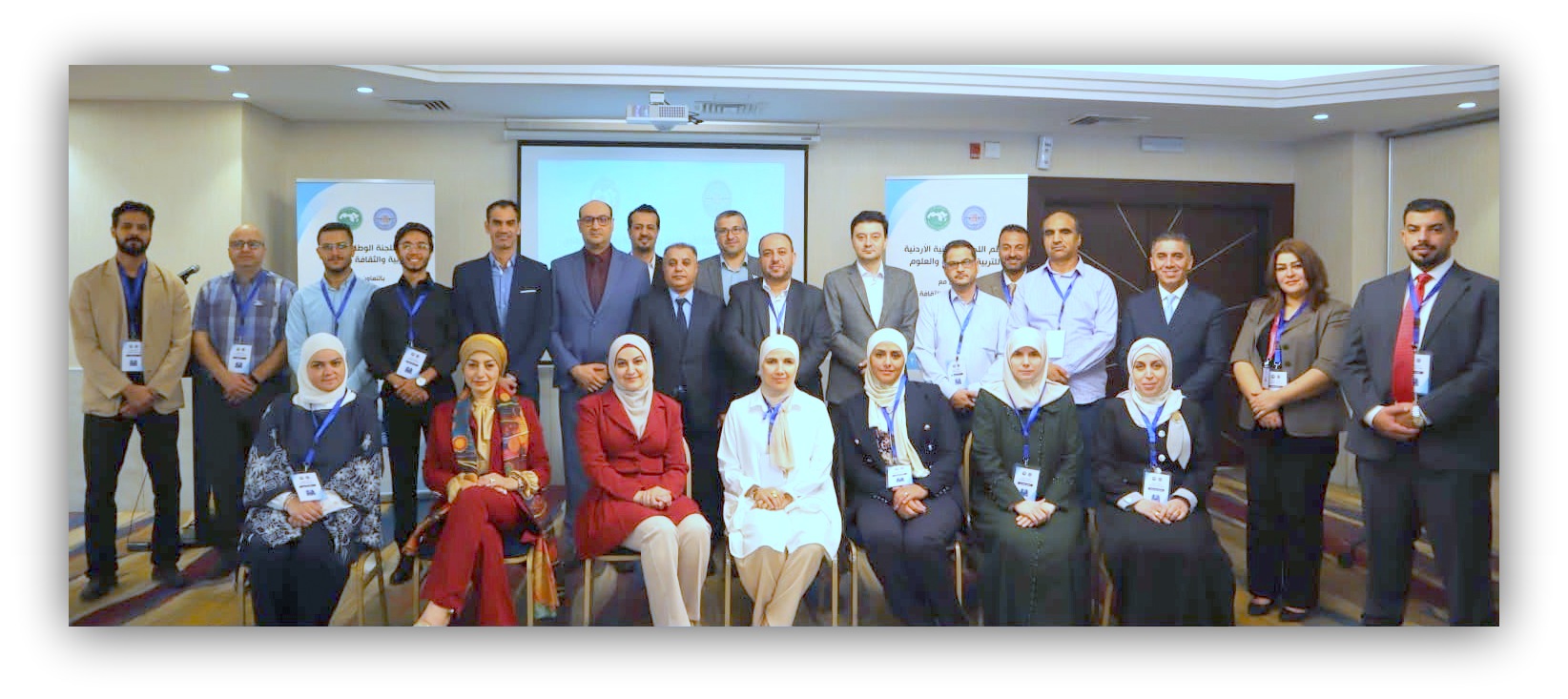
ALECSO organizes a training course in Amman on advanced employment of artificial intelligence
The Arab Educational, Cultural and Scientific Organization (ALECSO) Department of Education, in cooperation with the Jordanian National Commission for Education, Culture and Science, is organizing,…
Read more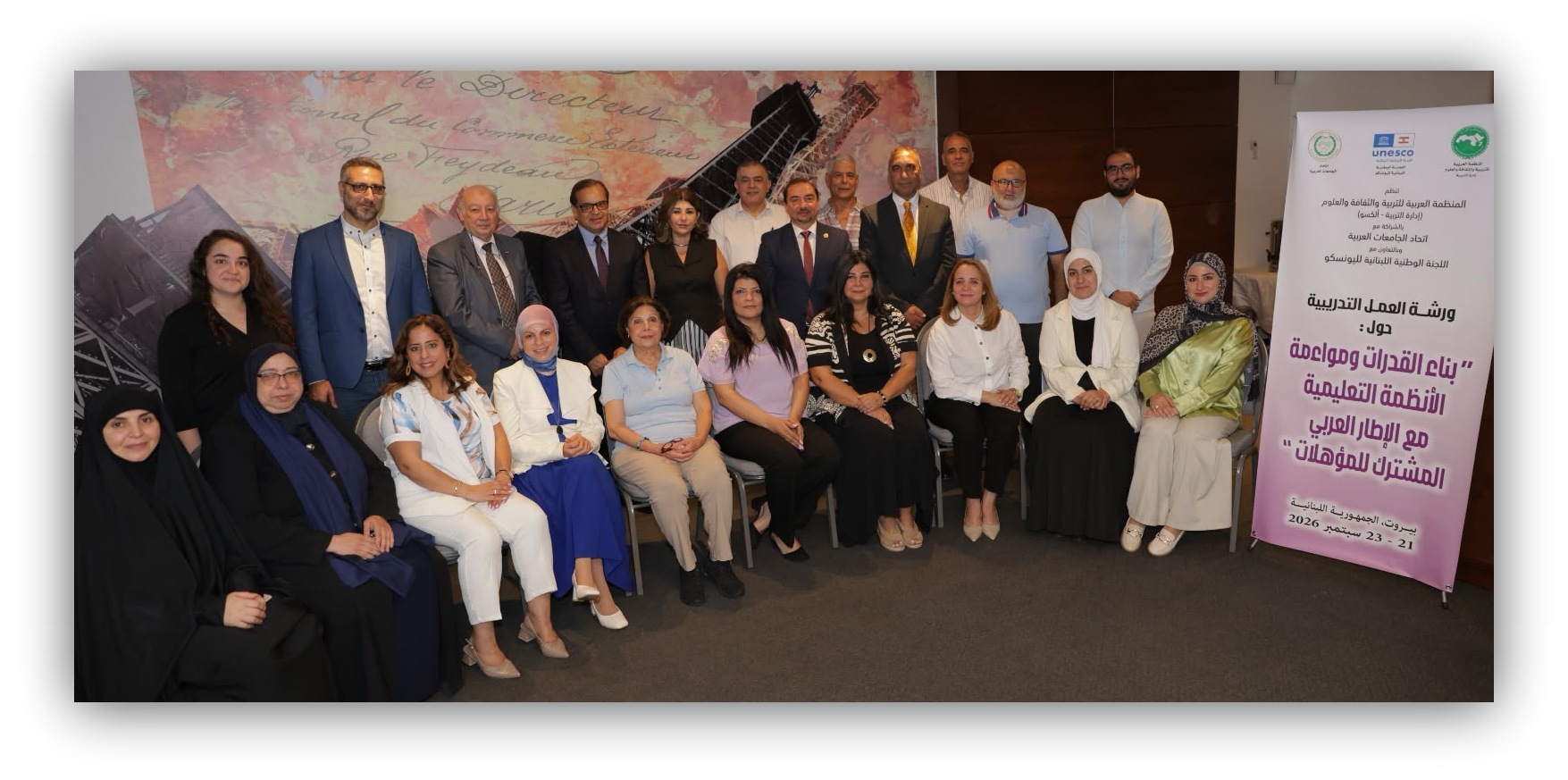
Sep, 23 2026
الألكسو تطلق في بيروت ورشة إقليمية لتعزيز جودة المؤهلات التعليمية وبناء الثقة في مخرجات التعلم
انطلقت في العاصمة اللبنانية بيروت أعمال الورشة التدريبية الإقليمية" تعزيز جودة المؤهلات التعليمية في ضوء الإطار العربي المشترك"، التي تنظمها المنظمة العربية للتربية والثقافة والعلوم (الألكسو) ممثلة…
Read more
Sep, 22 2026
الألكسو تهنئ المملكة العربية السعودية بيومها الوطني
بمناسبة احتفال المملكة العربية السعودية يوم الاربعاء 23 سبتمبر 2026 بيومها الوطني السادس والتسعين، يتقدم معالي الأستاذ الدكتور محمد ولد أعمر، المدير العام للمنظمة العربية للتربية والثقافة والعلوم،…
Read more