General information
The Arab League Educational, Cultural and Scientific Organization (ALECSO) is holding the twenty-first session of the Conference on Antiquities and Cultural Heritage in the Arab World in cooperation with UNESCO (2001 Convention on the Protection of the Underwater Cultural Heritage) and with the Ministry of Culture of the Republic of Tunisia, under its generous hosting, from 28 to 30 October 2013 in the city of Mahdia (Mahdia Palace Hotel)
The city of Mahdia:
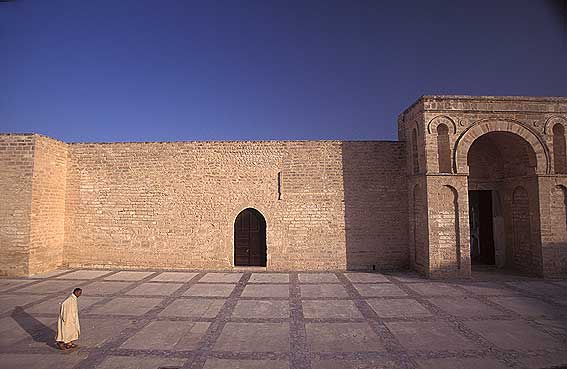 Mahdia is distinguished by its advanced defensive position overlooking the sea on three sides, making it an impregnable fortress standing in the middle of the Tunisian coast, defying nature and fleets throughout history and ready to confront any rebellion in Ifriqiya and the Maghreb. Ubayd Allah al-Mahdi, the first of the Ubaydid caliphs, began building it in 303 AH/912 AD. The Mahdia peninsula became the capital of the Fatimid state and gained great influence in the East and the West as one of the most important trading centres of the Mediterranean basin. Mahdia is known for the richness of its cultural and historical heritage, owing to the diversity of the nationalities and cultures of those who came to it from all over the world. Today the old city of Mahdia is the basis of its cultural tourism, with a unique tourist trail, an architectural character that highlights its local specificities, and traditional crafts such as gold silk textiles and traditional jewellery. It attracts visitors with its archaeological monuments such as "Skifa el Kahla" (303 AH / 308 AH), the Great Mosque (early 4th century AH), the ancient port (Punic period) and the shipyard "Dar El Bahr" (16th century AD).
Conference venue: Mahdia Palace Hotel:
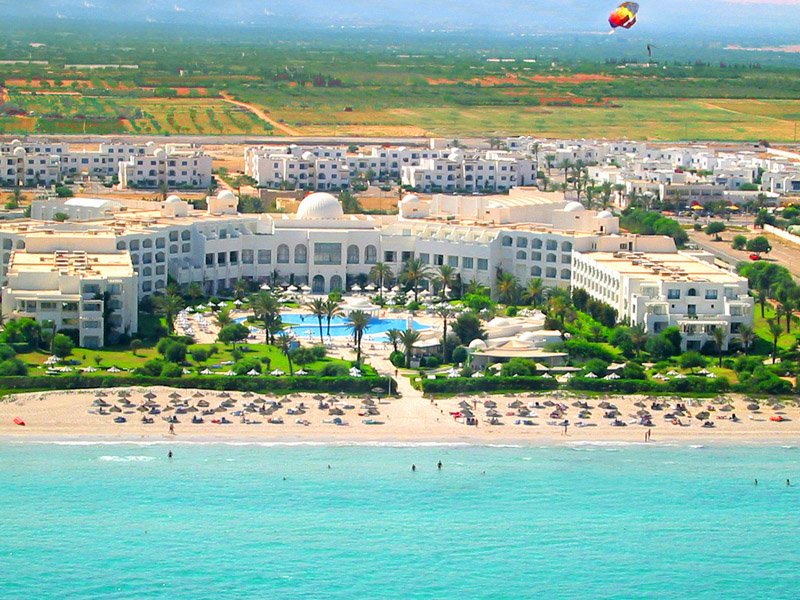
. . . . . . . . A 5-star hotel offering its guests every comfort and luxury. Visit the hotel's website
The Mahdia Room at the Bardo National Museum:
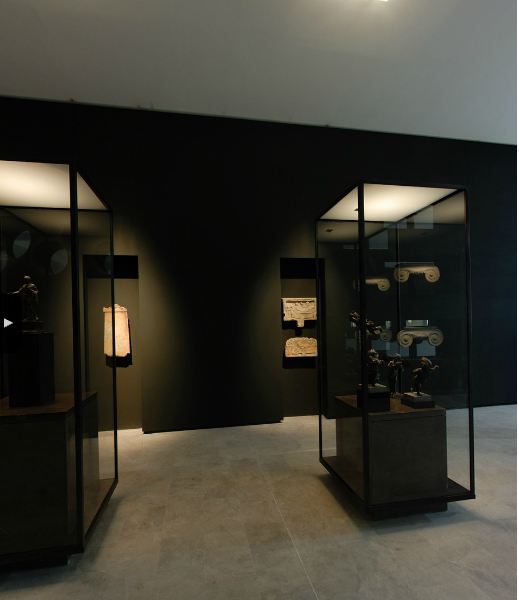 It is a room dedicated to the underwater treasures of the Mediterranean: Greek treasures and finds with a story and a history, forming a museum in its own right. They were discovered in June 1907 by sponge fishermen. Between 1908 and 1913 underwater excavations were carried out under the supervision of the Frenchmen Alfred Merlin and Louis Drappier; they were then interrupted and resumed in 1948, and again in 1954-1955. In 1988 the National Heritage Institute of Tunisia and the Bonn Museum in Germany signed an agreement to treat and restore part of the objects that made up the cargo of a ship that sank off the coast of Mahdia in the first century BC. These objects were exhibited in Bonn, then the capital of Germany, between September 1994 and February 1995, before their final display at the Bardo. The results of the restoration, together with a study of the objects, were published in two volumes. The project was carried out with Tunisian and German public and private contributions; the French Museums Directorate contributed to the lighting, and the project was supported by the Agency for Heritage Development and Cultural Promotion of the Tunisian Ministry of Culture. These objects are believed to have come mainly from Piraeus, the port of Athens, between 80 and 70 BC, probably bound for the Italian coast. The ship was caught in a storm that prevented it from crossing the Strait of Messina, so it changed course towards North Africa, where it sank 4,770 metres off the coast of Mahdia at a depth of 39.50 metres. The ship's cargo was a collection of objects intended to decorate the rooms and garden of a luxurious house belonging to a member of the Roman aristocracy. Visitors can see all these objects and tools, as well as handicrafts and pottery that belonged to the ship's sailors. Among the statues is a small statue of the god Hermes walking and beckoning his followers with his right hand; the bronze base of the statue is a unique piece. The statue of a satyr appears to be holding a vessel in his left hand and drinking from it; it is one of the oldest representations of this mythological figure. Visitors can also see a bust of a bearded Dionysus dating from the second century BC.
Final report
At the invitation of the Arab League Educational, Cultural and Scientific Organization (ALECSO) and generously hosted by the Ministry of Culture of the Republic of Tunisia, the twenty-first session of the Conference on Antiquities and Cultural Heritage in the Arab World was held from 28 to 30/10/2013 under the title "Underwater Cultural Heritage". Representatives of the following fifteen Arab countries took part in the Conference (in alphabetical order): United Arab Emirates Republic of Tunisia People's Democratic Republic of Algeria Kingdom of Saudi Arabia Republic of the Sudan Sultanate of Oman State of Palestine State of Qatar Union of the Comoros State of Kuwait Lebanese Republic State of Libya Arab Republic of Egypt Kingdom of Morocco Islamic Republic of Mauritania Republic of Yemen
Also participating in the Conference were a representative of the General Secretariat of the League of Arab States, a number of experts, and representatives of UNESCO, the International Centre for the Study of the Preservation and Restoration of Cultural Property (ICCROM), the International Council on Monuments and Sites (ICOMOS), the ICOMOS International Committee on the Underwater Cultural Heritage (ICUCH), the International Council of Museums (ICOM), the Arab Regional Centre for World Heritage (Bahrain) and the Regional Conservation Centre for Cultural Heritage in the Arab Region (Sharjah).
The twenty-first session opened in the city of Mahdia, Republic of Tunisia, with an address by H.E. Mr. Mehdi Mabrouk, Minister of Culture of the Republic of Tunisia, who welcomed the participants to the land of green Tunisia and to this maritime city rich in archaeological and historical evidence both on land and under its waters.
The Minister noted that Tunisia had previously hosted this Conference in 1963 and in 1987, sessions devoted to epigraphy and ancient inscriptions, water sources, excavation, survey and archaeological digs. Tunisia's third hosting of the Conference reflects the great importance it attaches to continued cooperation with the Arab League Educational, Cultural and Scientific Organization, and confirms its commitment to strengthening the bonds of cooperation with its sister Arab countries.
The Minister stressed the importance of preserving the underwater cultural heritage, an important and rich heritage abounding in Arab seas, just like the heritage on land. It consists of the remains of submerged cities, ports, harbours and economic installations, such as the wreck found in 1907 in the waters of Mahdia.
The Minister drew attention to the risks facing the underwater heritage and the need to address them through legislation, legal solutions and appropriate preventive measures. He announced the wish of the Republic of Tunisia to establish a regional centre for the underwater cultural heritage in the city of Mahdia itself, and expressed the readiness of the Tunisian government to provide official premises to house the centre. He called for the rehabilitation of the underwater heritage and its integration into sustainable development plans, expressing the hope that this Conference would light the way towards preserving this cultural heritage and putting it to use for the benefit of Arab people.
In his address, H.E. Dr. Abdullah Muhareb, Director General of the Arab League Educational, Cultural and Scientific Organization, welcomed the delegations and experts taking part in this ancient historic city, and thanked the Ministry of Culture of the Republic of Tunisia for generously hosting the Conference. He stressed the Organization's commitment to holding the Conference regularly since 1947. He called for an evaluation of past experience and of the Conference's usefulness, for avoiding repeated recommendations and rhetoric, for keeping pace with the challenges of the age, and for creating interactive spaces on the Conference website launched on the occasion of this session, so as to facilitate communication and openness to international experience.
In his address, the Director General dwelt on the current situation in the Arab countries, one of the consequences of the "Arab Spring": the destruction and looting of cultural heritage resulting from the breakdown of security, which has affected archaeological sites and museum collections. He warned of the dangers of continued Israeli attacks on the Palestinian cultural heritage, particularly in the city of Jerusalem, through ongoing settlement in the occupied Palestinian territories and persistent attempts to falsify history in disregard of international law, and paid tribute to the Palestinian people resisting Israeli schemes.
The Director General pointed to the richness of the underwater heritage of the Arab countries, most of which overlook the seas and control maritime routes, with their ports and shipwrecks, and to the destruction this fragile heritage suffers as a result of wars, looting and piracy. He referred to the international efforts to protect the underwater heritage embodied in the 2001 Convention on the Protection of the Underwater Cultural Heritage, ratified so far by 45 states, six of them Arab.
He stressed the need to preserve, protect and manage the maritime heritage and to make good use of it within sustainable development plans. He insisted on the need to correct shortcomings in school curricula, which should raise awareness of the importance of cultural heritage by helping to form a new generation equipped with knowledge of it. The Director General also stressed the importance of producing practical plans for the conservation of the underwater cultural heritage, strengthening the exchange of expertise and setting up training programmes that meet needs.
In his opening address, Mr. Mohamed Najem Gharsalli, Governor of Mahdia, welcomed the participating delegations, praising the holding of the Conference in this historic city, which nearly a century ago witnessed the first discovery of submerged antiquities off its shores, and the archaeological and historical sites of the city and the governorate. He wished the participants a successful Conference and a pleasant stay.
Address by Dr. Mounir Bouchenaki, representative of the Arab Regional Centre for World Heritage – Kingdom of Bahrain
(summary)
Address by UNESCO
(to be added)
Dr. Samia Bibars, Minister Plenipotentiary and Director of the Culture and Dialogue of Civilizations Department of the League of Arab States, delivered the address of H.E. Dr. Nabil Elaraby, Secretary-General of the League of Arab States, in which she praised the efforts of the Arab League Educational, Cultural and Scientific Organization (ALECSO) to advance joint Arab cultural action and expressed thanks and gratitude to the Republic of Tunisia, government and people, for hosting this Conference. In her address, Dr. Bibars stressed that the heritage of nations is a fundamental pillar of their cultural identity and that the relationship of the Arab people with their heritage is an organic one.
The address also dealt with the main challenges facing the Arab nation in protecting the Arab cultural heritage, foremost among them the armed conflicts that many Arab countries have experienced amid the political changes and social transformations that followed the outbreak of "the Arab Spring revolutions". The address also referred to Israeli violations and encroachments on archaeological and historical sites in the Palestinian territories.
In her address, Dr. Bibars stressed the urgent need for greater national, regional and international efforts to protect our Arab cultural and civilizational heritage within the framework of the relevant international conventions.
Speaking on behalf of Ms. Irina Bokova, Director-General of UNESCO, Mr. De Silva conveyed Ms. Bokova's greetings to the participants
and stressed the cooperation between UNESCO and ALECSO to this end,
At the procedural session, Dr. Mourad Betrouni of the People's Democratic Republic of Algeria,
chair of the previous session, whose theme was heritage and cultural tourism and in which 15 states took part alongside regional and international organizations, presented the report on the follow-up of the recommendations and results of the previous Conference contained in the documents of this Conference.
Dr. Betrouni, representing the Republic of Algeria, then handed over the chairmanship to the Republic of Tunisia, represented by Dr. Adnan Louhichi, Director General of the National Heritage Institute and Chair of the Twenty-first Conference on Antiquities and Cultural Heritage, and thanked the Tunisian state for hosting the Conference in the city of Mahdia.
Dr. Adnan Louhichi of the Republic of Tunisia, chair of the current session, also gave a presentation on maritime archaeology in the Arab countries, a relatively recent science, especially in the Mediterranean basin, which embodies the Phoenician, Punic, Greek, Roman and Arab civilizations and witnessed maritime explorations setting out from Carthage to the rest of the Mediterranean, an extension of the tangible cultural heritage on land.
The participating delegations elected Prof. Dr. Mohamed Mostafa Abdel Meguid of the Arab Republic of Egypt as Vice-Chair, and Dr. Hamdan Taha, representative of the State of Palestine, as Rapporteur of the Conference.
The agenda and timetable of the Conference were adopted; they had previously been approved at the preparatory meeting of the Conference's Permanent Bureau, composed of the United Arab Emirates, the Arab Republic of Egypt, the State of Kuwait, the Sultanate of Oman, the Republic of Algeria and the State of Qatar.
Any other business was also included, marking the start of the presentations and discussion.
The Conference began its work at the first plenary session by hearing the main cultural news from the Arab scene, as follows:
The Conference began its work with the United Arab Emirates announcing the inscription of Khor on the World Heritage List. The State of Qatar, which chairs the Arab Museums Organization, welcomed cooperation with ALECSO. The Kingdom of Saudi Arabia announced the inscription of Historic Jeddah on the World Heritage List and asked for support. The State of Libya announced its intention to begin preparing a nomination file for the city of Tobruk and requested technical assistance in developing underwater archaeology. The Kingdom of Morocco announced a project to establish an Arab observatory, its hosting of a conference from 16 to 20/12/2013, and its intention to prepare a nomination file for the rare argan tree for the natural World Heritage List and to inscribe a distinctive dance from the south of the Kingdom on the intangible heritage list.
The Islamic Republic of Mauritania announced its plan to register archaeological sites and requested assistance in preserving them. The Republic of Algeria announced that it would host a cultural event celebrating the city of Constantine as Capital of Arab Culture. The State of Kuwait announced that it would host the meeting of the World Heritage Committee in the Arab States, urged states to attend and to support the role of the Regional Centre in Bahrain.
Palestine announced its intention to stand for membership of the World Heritage Committee at the UNESCO General Assembly, and that, in cooperation with ICCROM and UNESCO and with the support of the Government of Malta and organizations working in the field of cultural heritage, it had completed a Charter for the Conservation of Cultural Heritage in Palestine. It also announced the discovery by fishermen of a bronze statue of the god Apollo off the shores of Gaza.
ICCROM announced a regional course in ---------- and a course on reorganizing storerooms, as well as national initiatives in Yemen and Libya.
Alexandria University announced that its Centre for Maritime Studies is ready to receive students and trainees and awards a diploma in this field. The President of the Union of Arab Archaeologists announced the equipping of a training centre in Cairo.
At the first session of the Conference, several statements were made by the Republic of Tunisia, the Arab Republic of Egypt and Kuwait.
Following the statement made at the opening session by the Tunisian Minister of Culture, the readiness of the Republic of Tunisia to host the regional centre for the underwater heritage in the city of Mahdia was recalled.
Dr. Mohamed El-Kahlawy, Secretary of the General Union of Arab Archaeologists, made a statement on the continuing destruction and looting in some "Arab Spring" countries, which has affected archaeological sites in Egypt, Syria, Libya and Mali, pointing to the need to intervene to stop these attacks and to develop practical mechanisms for preserving cultural heritage during armed conflicts.
The State of Kuwait submitted organizational proposals for the Conference, including dividing it into three parts: the main conference, devoted to deliberations and discussion among state representatives; workshops for state representatives; and scientific sessions open to researchers and students.
The website of the Conference on Antiquities and Cultural Heritage in the Arab World
The Arab League Educational, Cultural and Scientific Organization (Heritage Protection Programme) has launched a website devoted to heritage, structured around the field of heritage. The website project was presented to the participants at the 21st session, Tunisia, 28-30 October 2013. This step implements a recommendation of the Ministers responsible for Cultural Affairs at their 18th session held in Bahrain in November 2012. The website will also provide services for specialists and serve as a link between the Organization and experts and researchers interested in heritage.
The proceedings and contributions of the participants in this Conference will also be made available; the content of the website can be accessed through the following link:
The website will be opened to the general public as soon as the Conference material has been uploaded.
First session: The current situation of the archaeological heritage in the Arab countries
The representative of the Arab League Educational, Cultural and Scientific Organization presented a report on the implementation of the recommendations of the twentieth session of the Conference on Antiquities, held in Algiers in March 2012 on "Antiquities and Cultural Tourism", which were adopted by the Conference of Ministers responsible for Cultural Affairs in the Arab World at its last session in Manama in November 2012, making them binding on the states and the Organization. She noted that, as on the previous occasion, ALECSO had been unable to prepare a document giving a complete picture because of the small number of replies received from member states despite all the efforts made: only five states replied, namely the Sultanate of Oman, Tunisia, the Kingdom of Morocco and the Kingdom of Saudi Arabia. The Organization's report focused in particular on the decisions it had implemented, chief among them cooperation with the ATHAR programme in Sharjah in organizing training courses for specialists in the management of archaeological sites and museums, inventory, archaeological mapping and preventive archaeology...
As regards the implementation of the decisions on establishing a Board of Arab Museums under the umbrella of ALECSO, the Regional Centre for Combating Illicit Trafficking in Cultural Property, and the standardization of the terminology used in the archaeological sciences in the Arab world, four committees were formed within the Conference and tasked with preparing implementation sheets to be presented to the Conference at its closing session.
Presentation of the project to establish the Regional Office for Combating Illicit Trafficking in Arab Cultural Property
Mandated by ALECSO's Heritage and Antiquities Programme, Dr. Osama El-Nahas, supervisor of the project to establish the underwater museum and the Centre for Maritime and Underwater Archaeology in Alexandria, presented a project to establish a regional centre to combat theft, smuggling and illicit trafficking in cultural property in the Arab world. The project's objectives are to combat theft, smuggling and illicit trafficking in cultural property in the Arab world; to recover and return such property to its countries of origin by all available legal, diplomatic and popular means (through international civil society organizations); and finally to safeguard the rights of Arab states over property that was stolen, given away or even exported legally, namely intellectual property rights.
The study also defined the centre's strategy and tasks, as well as the existing and new mechanisms to be used, particularly concerning intellectual property. An outline of the centre's administrative and organizational structure was drawn up, and a proposal was made for discussing its headquarters and the necessary funding.
Presentation of the draft guide for compiling a dictionary of the technical terms used in the field of antiquities and cultural heritage in the Arab world
Mandated by ALECSO's Heritage and Antiquities Programme, Dr. Osama El-Nahas presented a proposal to prepare a guide for compiling a unified dictionary of archaeological and heritage terms. It has clearly been observed that those working in heritage and antiquities in all Arab bodies, including Arab organizations, differ and do not agree on using a single term. The Arab League Educational, Cultural and Scientific Organization therefore had to take the initiative, hence the idea of this unified dictionary, to be circulated to all Arab and international organizations working in heritage and antiquities, as well as universities, research centres and researchers in these fields.
. The proposal set out the purpose of the guide, namely to be the reference document for compiling the unified dictionary of heritage and archaeological terms. It covered the working method for the dictionary, types and classifications of dictionaries, timelines and work teams, and finally the committee responsible for selecting, reviewing and approving the terms before their ratification and publication.
Statement by Ms. Chadlia Annabi, representative of the International Council of Museums (ICOM), who conveyed the greetings of Mr. Hans Martin, who was unable to attend in person.
She gave an overview of the Council, its objectives, its tasks and its programmes to combat illicit trade in cultural property. She discussed possible cooperation with ALECSO by activating the agreement signed with it and helping to set up a committee or observatory of Arab museums to collect information, projects and the needs of Arab museums, drawing on the experience of ICOM and its Arab network within ICOM Arab, as well as cooperation in combating illicit trafficking in cultural property drawing on ICOM's successful experiences. Ms. Annabi recommended that ALECSO adopt a project to publish a book entitled "One Hundred Missing Objects" from the Arab countries.
Second session: Underwater cultural heritage
This presentation by Dr. Emad Khalil, entitled "Underwater Cultural Heritage: Discovery, Protection, Display and Education – Where Do We Stand in the World?", dealt with the current situation of the underwater cultural heritage in the Arab countries and the various aspects of dealing with this heritage, namely
discovery, protection, display and education. The study showed that some Arab countries have already begun work in a number of these areas, but the overall level of Arab activity in this specialty is not commensurate with the archaeological and heritage resources the Arab countries possess. The presentation stressed that education, training and joint work are the main path to progress for the Arab countries in this field, and the paper concluded with a number of recommendations and proposals.
An analytical reading of the 2001 Convention on the Protection of the Underwater Cultural Heritage, presented by Dr. Fadhel Bliebich and Dr. Mounir Bouchenaki, stressed the importance of adopting the 2001 international convention given the seriousness of the threats posed to this heritage by unauthorized activities and even some legitimate ones. Despite these compelling reasons, only 45 states have ratified it, six of them Arab. The Convention sets out the basic principles for protecting the underwater cultural heritage, provides a system of cooperation between states and proposes widely recognized practical guidelines for dealing with and exploring this heritage. It comprises a main text and an annex setting out the rules for activities directed at underwater cultural heritage.
The situation of the underwater cultural heritage in the Arab world and the challenges facing institutional and legislative frameworks
Dr. Mohamed Mostafa Abdel Meguid, General Supervisor of the Grand Egyptian Museum project, General Supervisor of the General Department of Underwater Antiquities of the Supreme Council of Antiquities and Scientific Director of the Centre for Maritime and Underwater Cultural Heritage at Alexandria University, gave a presentation entitled "Underwater cultural heritage in the Arab world and the challenges facing institutional and legislative frameworks". It offered a historical survey of underwater research and the recovery of submerged antiquities since the beginning of the twentieth century in several Arab countries, at the same time as some Western countries; however, our Arab world did not keep pace with this work, either scientifically or practically.
It is also known that maritime archaeology became active in the 1950s with advances in underwater archaeological survey and excavation techniques. Some Arab countries timidly joined the ranks of countries active in this field in the 1980s, with the support of institutes and societies from those countries.
It was expected that our Arab countries would take the initiative to set up departments to study and preserve this type of heritage, especially after the UNESCO General Conference adopted the Convention on the protection of underwater heritage in 2001, all the more so since many of these countries have long-established heritage management institutions while others are advancing rapidly along this path. Yet specialists, both practitioners and academics, remain few, and archaeological surveys and research in the waters of our Arab world remain limited compared with its vast and extensive waters and its many rich civilizations.
The most important observation is that these countries have never cooperated in studying and protecting their underwater heritage, which is unfortunately marked by a lack of knowledge, information and coordination.
The paper summarized the main problems in the academic and organizational fields: academically, the small number of study programmes on offer and the scarcity of specialists; organizationally, the small number of departments and staff. The paper concluded with a number of proposals, including the creation of a structure for heritage management,
the development of research and exploration plans, cooperation with local and foreign academics and specialists, the promotion of scientific publishing, training and capacity building, and opening up to the public. On the legislative level, national laws predate the 2001 Convention
and some laws issued after the Convention did not take its provisions into account. Moreover, the laws deal with the matter in the sections on supervision or definitions, in a brief general sentence, and mostly as precautionary measures.
Day two, 29/10/2013
First session: Presentation of the experiences of the Arab countries on the main theme, "Underwater Cultural Heritage"
Several Arab countries presented their experiences in the field of underwater antiquities: Tunisia, Algeria, the Kingdom of Saudi Arabia, the Kingdom of Morocco, Mauritania, the Sultanate of Oman, the State of Qatar, the State of Kuwait, Libya and Palestine.
The presentation by the Republic of Algeria covered the situation and prospects for protecting the maritime and underwater cultural heritage in the light of experience gained within Euro-Mediterranean programmes, as well as the legal framework for protecting cultural heritage, which comprises several laws such as the penal code, the customs code, the Algerian maritime code and the law on the protection of cultural heritage. The second part of the presentation introduced the National Public Maritime Museum as the body responsible for inventorying, studying and protecting the maritime and underwater cultural heritage.
The Kingdom of Saudi Arabia presented a paper entitled "Underwater cultural heritage in the Kingdom of Saudi Arabia", highlighting the importance of underwater cultural heritage sites in the Arabian Gulf and the Red Sea. The paper described the procedures followed in exploring underwater cultural heritage, domestic legislation and international cooperation, and concluded with some of the achievements made.
The Kingdom of Morocco gave a presentation on its experience in preserving the underwater cultural heritage, covering the legislative aspect, referring to Law 22/80 currently in force and the ratification of the 2001 UNESCO Convention by Royal Dahir No. 1.09.138 of 1 December 2011.
It also presented a draft law on the protection of cultural heritage, under discussion, submitted by the Ministry of Culture, which, in addition to a precise definition of the underwater heritage, devotes a full chapter of three sections and 10 articles to this heritage.
In terms of research and studies, several joint missions were carried out with limited results, the most important being the archaeological survey mission in the Tangier area in northern Morocco, organized between 1999 and 2004 in cooperation between the National Institute of Archaeological and Heritage Sciences and the Institute of Nautical Archaeology in the United States.
National missions discovered the wreck of an ancient ship off the coast of Safi in July 2013; Ministry of Culture staff carried out research on the discovery to identify it and take samples on 12 and 15 July 2013. The wreck of the Kaiser Wilhelm der Grosse was also discovered off the coast of Dakhla by a local association, and the Ministry of Culture independently verified the discovery.
The presentation of Egypt's experience traced the history of the study of underwater antiquities back to the beginning of the twentieth century, developing from individual attempts by amateurs to the involvement of government and academic institutions. Organized activity began in the early 1990s with the creation of a General Department of Underwater Antiquities, which now includes experts in archaeology and diving. Many important discoveries have been made by joint Egyptian-foreign missions or purely Egyptian missions.
The Islamic Republic of Mauritania presented its experience in preserving the underwater cultural heritage. Throughout its history the country has been a crossroads and line of contact between Arab and African civilizations, and it encompasses the Atlantic coast and the northern bank of the Senegal River.
As regards the underwater heritage, the archaeological sites spread along the coastal strip and adjacent areas and the wrecks of ships point to maritime life and maritime economic activity in past centuries. This area includes the "Banc d'Arguin Reserve", one of the most important heritage sites in the world for its biodiversity and for the islands and archaeological sites surrounding it. Excavations were organized there in 1986 under the supervision of the Mauritanian Institute for Scientific Research in cooperation with French experts, leading to the discovery of the French ship "Méduse", which sank off the Mauritanian coast in 1816. To protect cultural heritage in general and the underwater heritage in particular, Mauritania has enacted a number of laws: Law 72-160 on the protection and enhancement of the national heritage, Law 2005-046 determining the fate of discovered archaeological objects, and Law 95/009 on the Merchant Shipping Code.
Libya gave a presentation on its experience in preserving the underwater cultural heritage, After attending the workshop held in Alexandria in April 2010, a proposal was made to the then head of the Department of Antiquities in Libya to form a Libyan working team within the Department and to provide the resources for this work, but this was not done, and cooperation continued between the foreign missions working in Libya and the Department of Antiquities.
Contact was made with the Phoenix Society for Maritime Studies, a private association, for several reasons:
1- Its members own diving and photography equipment acquired at their own expense, as well as diving skills and
2- Holding workshops for divers and training them in archaeological survey and documentation.
3- Training Libyan archaeological researchers in diving.
4- Monitoring the work of oil companies operating in Libya and elsewhere during exploration and drilling operations.
Libya announced its intention to prepare a nomination file for the historic city of Tobruk (Antipyrgos), a city of historical importance that holds the wreck of a second-century AD Roman ship, as well as remains from the Second World War.
The experience of the Sultanate of Oman, rich in maritime heritage dating back to the third millennium BC, focused on involving the local community and recreational diving centres in protecting the underwater cultural heritage as partners in the protection process. The Ministry of Heritage and Culture established a unit dedicated to underwater antiquities, which has experience in surveying and searching for underwater antiquities:
1- The first experience in the Sultanate was in 1998 with Blue Water Recoveries in the Hallaniyat Islands, searching for the wreck of the Esmeralda (Vicente Sodré's ship), which sank in 1503 AD; the work was completed in 2013.
2- The second experience was with the People's Republic of China, searching for the remains of Zheng He's fleet, which sank in the fifteenth century; this was done in two phases, in 2008 and 2012.
3- The third experience was with the Kingdom of the Netherlands, with which a memorandum of understanding was signed to search for the wreck of the Amstelveen, which sank off the Omani coast in 1763 AD.
The Sultanate is currently preparing a programme based on international practice so that it can be a regional leader in this field, as befits its maritime history and heritage. Two phases of the programme will be implemented in the coming period: the first, collecting data from domestic and foreign archives; the second, surveys covering several areas, including completion of the second phase of the Hallaniyat Islands project.
Palestine also gave a presentation on underwater antiquities, which are concentrated in the southern part of the Mediterranean coast, Gaza having been the main maritime outlet onto the Mediterranean. Despite the changes the Gaza coast has undergone, it contains the remains of ancient ports uncovered in recent years through Palestinian-French cooperation at the site of Blakhiyya, known as the ancient port of Gaza (Anthedon), as well as the port of Maiumas, known as Tida. The shores of Gaza abound in submerged antiquities that appear from time to time as chance finds by fishermen, the latest being the discovery of a bronze statue of the god Apollo off the shores of Gaza.
Day two: second session
The Conference divided into three workshops; teams were formed and coordinators appointed as follows:
First workshop: legislation and laws on the underwater cultural heritage
Dr. Mounir Bouchenaki, Dr. Fadhel Bliebich and Dr. Arturo de Silva made a presentation on the subject based on the Tunisian model. The legislative vacuum regarding underwater cultural heritage in Tunisia was overcome some 30 years after the country's independence, thanks in particular to the 1989 law on maritime wrecks and the Code for the Protection of the Archaeological and Historical Heritage and Traditional Arts, the main text establishing the legal regime for this heritage. Although this Code devotes a full chapter to underwater cultural heritage and enshrines principles later included in the international convention on underwater cultural heritage, it is not without shortcomings, and ways of overcoming them need to be explored.
The second group dealt with two topics: first, cultural heritage and sustainable development (Dr. Marc Bich and Dr. Carlo Beltrame); and second, the management of underwater cultural heritage sites – cultural heritage management (Dr. Athena Trakadas and Dr. Wafaa Soliman).
Recommendations:
The experts of the workshop on underwater cultural heritage and sustainable development recommend:
- Adopting proactive research and using modern means and techniques to protect the underwater cultural heritage.
- Preparing a guide to good practice in managing the underwater cultural heritage.
- Integrating the underwater cultural heritage into economic and social development.
- Involving civil society in protecting the underwater cultural heritage.
- Calling on the services responsible for managing the underwater cultural heritage to strengthen communication with the various public and private bodies and institutions active in the maritime field.
- Creating a network to support communication between the various stakeholders in the management of the underwater cultural heritage.
Third workshop: education, training and capacity building in the conservation of the underwater heritage (Dr. Zaki Aslan and Dr. Anna Lisa Zarattini)
Arab national legislation and laws on the underwater cultural heritage
Dr. Mounir Bouchenaki and Dr. Fadhel Bliebich made a presentation on the subject based on the Tunisian model
The legislative vacuum regarding underwater cultural heritage in Tunisia was overcome some 30 years after the country's independence, thanks in particular to the 1989 law on maritime wrecks and the Code for the Protection of the Archaeological and Historical Heritage and Traditional Arts, the main text establishing the legal regime for this heritage. Although this Code devotes a full chapter to underwater cultural heritage and enshrines principles later included in the international convention on underwater cultural heritage, it is not without shortcomings, and ways of overcoming them need to be explored.
Day three, 30/10/2013
The National Heritage Institute organized a field visit to some of the archaeological monuments of Mahdia and a boat trip around the city.
Thanks to the host country
Closing session
Recommendations
- Calling for an end to Israeli attacks on the cultural and religious heritage of the city of Jerusalem, especially attacks directed against Al-Aqsa Mosque, and calling on UNESCO to play its role in protecting this heritage and stopping the attacks on it.
- The Conference recommends forming a committee of experts to assess the damage and examine the state of the cultural heritage in Syria.
- Working to develop legislation and laws on the underwater heritage in the Arab countries
- Establishing the Regional Centre for Underwater Cultural Heritage in the city of Mahdia, Republic of Tunisia, which has expressed its readiness to host the Centre in this historic city rich in maritime heritage.
- Encouraging the Arab countries to ratify the 2001 Convention on the Protection of the Underwater Cultural Heritage, and submitting the matter to the next meeting of Arab Ministers of Culture.
- Integrating the underwater cultural heritage into educational programmes and producing scientific material on the underwater heritage for inclusion in the education system
- Working to strengthen partnership with the local community, including specialized non-governmental organizations and communities of fishermen and recreational divers
- Coordinating efforts among the Arab member states in training and capacity building, including the Arab League Educational, Cultural and Scientific Organization adopting and organizing an Arab training course on underwater cultural heritage to serve as a basis for forming Arab professionals in this field, and making use of the specialized centres in Egypt, Bahrain and Sharjah
- Calling on Arab universities to introduce maritime and underwater archaeology as a specialization within their study programmes in archaeology and heritage sciences.
- Calling on Arab bodies and institutions working in archaeology and underwater cultural heritage to undertake joint research projects, to join international associations working in this field and to promote scientific publication on underwater antiquities, including the publication of a book on underwater antiquities in the Arab world.
- Strengthening early warning systems and preventive measures when carrying out major coastal projects, and stressing the need for environmental and archaeological impact studies when licensing projects on sea shores.
- Preparing a list of Arab experts in the field of underwater cultural heritage and adding this data to the website
- ALECSO to adopt the project to publish "One Hundred Missing Objects: Looting and Theft in the Arab Region"
